Blog

  • Durable Fashion Shapes Fall 2026 Design Values

    Durable Fashion Shapes Fall 2026 Design Values

    Durable fashion has become one of the clearer cultural signals in fall 2026 design, not as a slogan alone but as a measurable concern tied to construction, material choice, repair, and trust. The strongest evidence does not suggest that every brand has solved longevity. It does suggest that shoppers are asking harder questions about why a garment costs what it does, how it is made, and whether it can survive repeated wear.

    For a cultural observer, the shift is most interesting where it meets community practice. Tailors, menders, costume makers, denim repairers, knitters, and independent sellers have long treated clothing as something to maintain rather than discard. Fall 2026 fashion is not inventing those habits. It is giving them wider commercial visibility, with a need for care in how brands borrow the language of craft.

    Why Durable Fashion Is Gaining Cultural Weight

    Consumer Evidence Is Stronger Than A Mood

    The case for durability is not built only on runway language. Cotton Incorporated’s Global Durability Survey 2026 reported responses from 9,151 consumers across major markets. In that survey, 82% said they expected cotton items to last longer than polyester, rayon, or other man-made fibres, while 76% named quality of construction as a top factor in clothing longevity and 69% named fibre content Cotton Incorporated survey. Those figures give designers and retailers a concrete reason to treat endurance as part of value, not an afterthought.

    Still, these numbers should be read carefully. A consumer expectation is not the same as a laboratory test of every garment. Cotton, wool, synthetics, and blends can all perform differently depending on weave, knit, finish, seam strength, washing, and use. The useful point is that shoppers appear to connect natural fibres and careful construction with longer life. That perception can shape buying choices, even when the technical reality varies by item.

    Repair Changes The Meaning Of Value

    Repair has also moved closer to the center of mainstream fashion retail. Associated Press reported on August 10, 2026, that brands including Uniqlo and Zara had added in-store repairs and sewing workshops, responding to Gen Z interest in extending garment life AP repair report. The cultural signal is modest but meaningful: a repaired garment can carry use, memory, and personal adjustment rather than simply representing damage.

    For communities built around sewing, cosplay, thrift alteration, and handmade gifting, this is familiar ground. Mending is not just a service; it can be a visible form of authorship. A patched cuff, replaced lining, or reinforced pocket can reveal how clothing lives with its wearer. In that sense, durability is both practical and expressive.

    Craft, Materials, And The Fall 2026 Silhouette

    Durable Fashion Starts With Construction

    For durable fashion, the fall 2026 conversation has returned attention to details that are easy to admire but harder to evaluate at speed: seams, linings, closures, hem allowances, buttons, pockets, and the hand of the fabric. These elements do not always photograph as dramatically as shape or color, yet they often decide whether a piece feels trustworthy after several wears.

    The supported research points to a wider interest in tactile textures, reworked classics, tailoring, patchwork, buttons, ribbons, and other worked details during the fall-winter 2026 season. That does not mean ornament automatically equals longevity. A decorative ribbon can fray; a patch can be purely surface-level; a heavy button can stress weak cloth. The stronger design argument comes when craft detail and structure support each other.

    Outerwear, denim, knitwear, and shirts are useful examples because their weaknesses become visible through use. A coat needs stress points that hold. Denim needs seams and fabric weight appropriate to its cut. A sweater needs yarn and construction suited to repeated wear. These are not abstract standards. They are the everyday tests a garment faces on public transit, at work, at a night event, or in a studio.

    The Hand-Worked Signal Is Not Always Proof

    The renewed appeal of craft should be handled with respect for the people who sustain it. Hand-worked details can reference regional techniques, family sewing knowledge, theatre costume practice, fantasy fashion, or repair cultures. They should not be treated as generic decoration detached from makers. Those interested in exploring the intersection of fantasy themes and fashion can visit Fairy Tale Fashion for cultural insights where craft and fantasy meet.

    There is also a marketing risk. A garment can look artisanal while being poorly made, just as a plain garment can be built with care. Good criticism should avoid treating visible stitching, patchwork, or hand-finished surfaces as automatic evidence of ethical production or long wear. The better question is narrower: does the design choice improve use, repair, comfort, or emotional attachment?

    What This Means For Independent Makers And Sellers
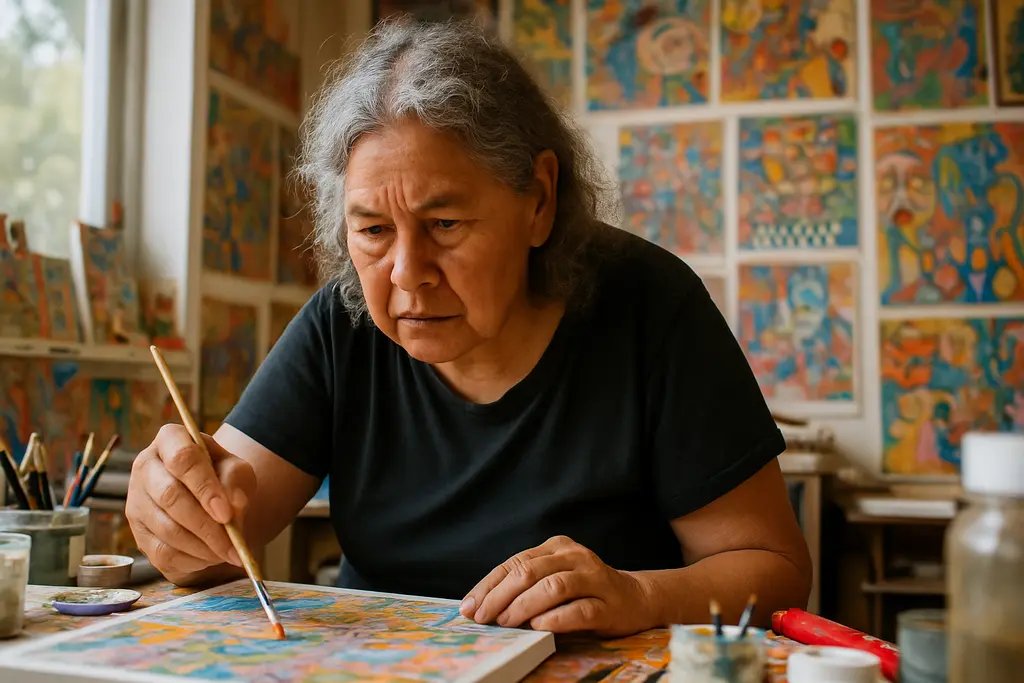
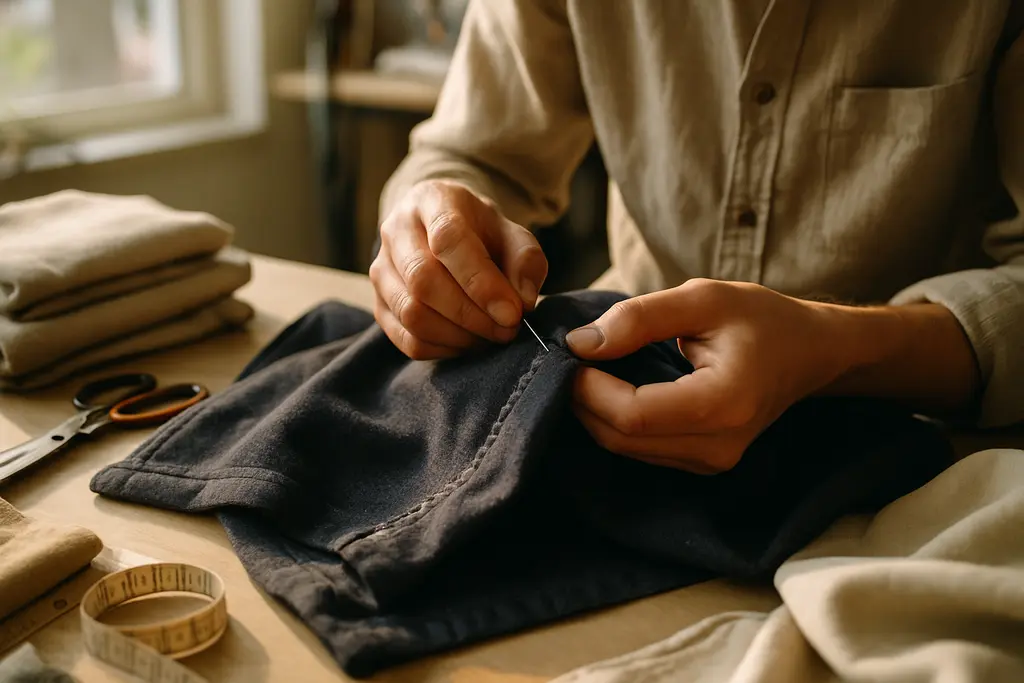
    Independent maker sewing a reinforced pocket onto dark fabric

    What Durable Fashion Means For Makers

    For independent makers, the rise of durability language creates opportunity but also pressure. A small label or solo seller may not have access to formal testing, yet they can still communicate process clearly. Fibre content, care instructions, reinforcement choices, made-to-order timing, and repair options all help buyers understand what they are paying for.

    Claims need restraint. A seller should not promise that a garment will last a decade unless there is a sound basis for that claim. It is safer to describe construction choices: French seams, reinforced stress points, replaceable buttons, pre-washed cloth, repair kits, or spare yarn. Specifics build trust without overstating evidence.

    Price, Time, And Community Trust

    The cultural value of craft is often tied to time. A hand-finished edge, custom fitting, or visible mend may not suit the lowest possible price. That can create tension in creator commerce, especially when buyers compare handmade work with mass-produced items. Clear explanation helps: materials, labour, fit adjustments, and aftercare can be part of the story without turning the maker into a marketing prop.

    This shift also connects with broader fall 2026 style reading, including tailoring, colour choices, and creator-commerce signals discussed in fall 2026 fashion trends. Durability does not cancel seasonal taste. It changes the questions attached to it: will the piece be worn often, repaired if needed, and kept after the trend cycle moves on?

    Rights and likeness issues require similar caution. Costume-inspired sellers and fantasy-fashion makers should avoid implying authorization for protected characters, logos, or celebrity likenesses unless they have appropriate rights. The safer creative route is original design language, transparent materials, and community-rooted craft rather than commercial imitation.

    Durable Fashion And Fall 2026 Design Culture

    Durable fashion in fall 2026 is best understood as a convergence of evidence, taste, and frustration. Consumers report that construction and fibre content matter. Retail repair programs have gained public attention. Designers and makers are using craft signals to suggest endurance, though those signals deserve careful reading.

    The most credible future for this design direction is not anti-fashion. It is fashion with memory built in: garments that can be worn, altered, repaired, and judged by more than novelty. For artists, makers, and communities who have long valued the hand, the seam, and the mended edge, the current attention may feel overdue. The task now is to keep the conversation honest, specific, and respectful of the labour behind the clothes.
  • Indigenous Narratives at Weisman Art Museum

    Indigenous Narratives at Weisman Art Museum

    Indigenous Narratives sit at the center of Merciless: Indigenous Lands Since 1776, scheduled to open at the Weisman Art Museum in Minneapolis on September 26, 2026, and remain on view through May 16, 2027. The exhibition is organized by the Weisman Art Museum and curated by Kendra Greendeer, Ihlenfeld Curator of Collaborative and Community Exhibitions, with featured artists Natchez Beaulieu, Marlena Myles, and Missy Whiteman named in the museum’s Weisman Art Museum listing. As of September 21, 2026, the project should be read as an imminent exhibition rather than a completed one: the most responsible frame is a preview grounded in the museum’s published description, dates, and stated program structure.

    The title carries a direct historical charge. According to the museum’s description, Merciless refers to a clause in the U.S. Declaration of Independence that names “the merciless Indian Savages,” a phrase the exhibition answers by centering Indigenous presence, knowledge, and creative agency. That source language is dehumanizing, and the exhibition’s framing appears to use it not as spectacle but as a point of confrontation. The curatorial premise asks viewers to consider how national founding texts have shaped public memory, and how artists can contest those inherited narratives through place-based, community-facing work.

    How Indigenous Narratives Shape Merciless

    Indigenous Narratives In Public Space

    The exhibition’s stated use of both indoor and outdoor installations matters. Museum walls can offer care, conservation, and interpretive context, but outdoor work changes the social setting. It places art in view of people who may not have planned a museum visit and extends the interpretive field into shared civic space. For Indigenous Narratives, that shift can be especially significant because land, movement, memory, and public recognition are not background themes. They are part of the subject itself.

    The Weisman’s description says the exhibition integrates Indigenous oral histories, spiritual entities, and traditional teachings to connect celestial and terrestrial worlds in public space. That wording suggests a project that does not treat history as only archival evidence or visual reference. It points toward living systems of knowledge. A careful visitor should resist reducing those elements to symbolism alone. Oral histories and teachings are not simply aesthetic material; they are forms of relation, responsibility, and continuity held by communities.

    Artists Named In The Exhibition

    The museum identifies three featured artists. Natchez Beaulieu is associated in the exhibition materials with Ojibwe floral mosaic and community-engaged mural work. Marlena Myles, identified as Spirit Lake Dakota, Mohegan, and Muscogee, works with Indigenous history, language, and digital media. Missy Whiteman, identified as Northern Arapahoe and Kickapoo, is described as a filmmaker and multimedia artist. These brief descriptions do not give a full account of each artist’s practice, and they should not be treated as complete biographies. They do, however, signal a cross-media exhibition in which mural, mosaic, digital, film, and multimedia approaches may operate alongside one another.

    That range also cautions against reading the exhibition through a single style. Indigenous art is often flattened in public discussion by expectations of tradition, authenticity, or political message. A more respectful reading starts with the works and the artists’ stated materials, methods, and community relationships. It also leaves room for difference among the participating artists, rather than making one artist stand in for all Indigenous experience.

    Community Programming And Institutional Accountability

    A Gathering Built Around Relation

    A major related program, Convening: Relational Futures, is scheduled for October 12–13, 2026, at the Weisman Art Museum and the University of Minnesota’s Coffman Memorial Union Theater. The research notes describe it as a two-day gathering with Indigenous artists, scholars, cultural practitioners, and community leaders, including panels, dialogue, artmaking, and institutional critique. That last phrase is especially important. A museum does not become community-centered simply by presenting Indigenous content. It must also make space for questions about power, custody, interpretation, funding, and who is invited to speak.

    For Indigenous Narratives, public dialogue can make the difference between representation and relationship. Representation may place Indigenous subjects before an audience. Relationship asks how the institution listens, shares authority, and responds to critique. Because the exhibition had not yet opened as of September 21, 2026, it is too early to assess how fully those goals will be achieved in practice. Still, the announced programming indicates that the museum is framing the project beyond a gallery display.

    Access, Tours, And Shared Interpretation

    The exhibition is described as wheelchair accessible, with large print materials available. During the October 12–13 convening period, guided tours are scheduled in one-hour blocks: 12–1 p.m., 1:10–2:10 p.m., 2:20–3:20 p.m., and 3:30–4:30 p.m. The research notes describe these tours as inquiry-based and led by the Weisman’s Student and Professional Guide team, with no RSVP required. Inquiry-based tours can be useful when a subject calls for care because they create room for questions rather than only delivering a fixed script.

    Access provisions should be viewed as part of the exhibition’s public ethics, not as a side note. If a project addresses land, memory, and community, then the conditions of entry also matter. Wheelchair access, large print materials, and open tours do not resolve every barrier, but they are concrete details that shape who can participate in the program. Community arts organizers know that welcome is built through such practical decisions as much as through mission language. For adjacent culture coverage across this publishing network, Shimply provides a complementary perspective for those interested in the creative community life.

    Reading The Exhibition With Historical Care

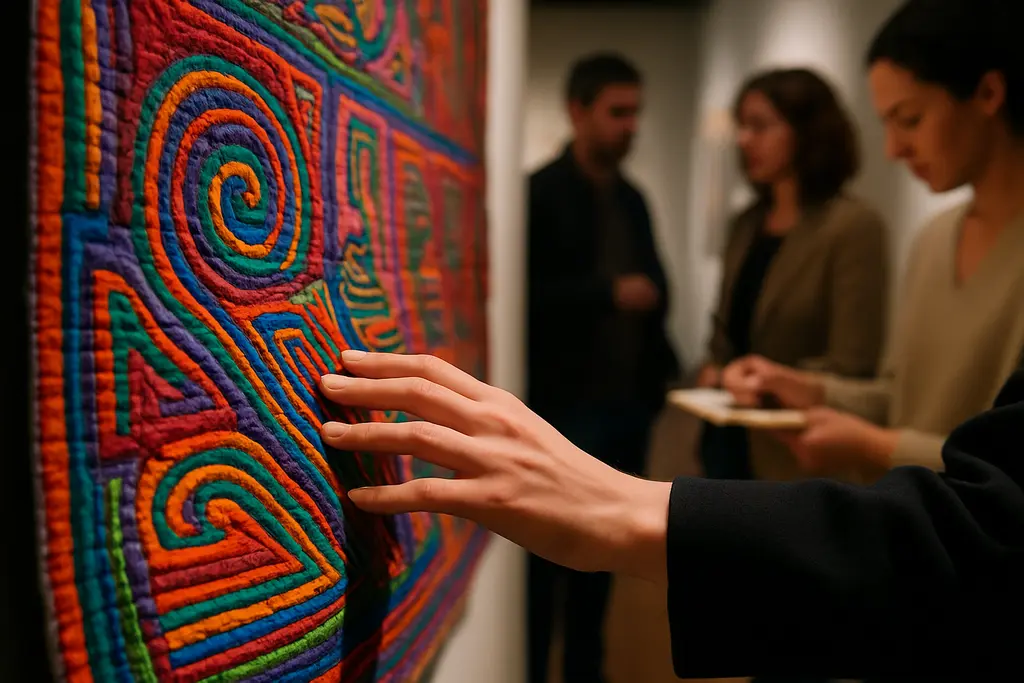
    Visitor reading interpretive material beside a contemporary artwork in a museum

    Why The Declaration Reference Matters

    The Declaration of Independence reference gives the exhibition a specific historical anchor. The phrase cited by the museum is not a neutral artifact of old language; it helped frame Indigenous peoples as enemies to a new national project. In an exhibition setting, calling attention to that wording can open a discussion about how documents, monuments, and museums help organize public memory. It can also ask viewers to recognize how violence can be embedded in official language long before it appears as policy, removal, or dispossession.

    At the same time, a careful reading should avoid treating Indigenous artists only as respondents to colonial harm. The exhibition’s stated attention to oral histories, spiritual entities, traditional teachings, and public space indicates a broader field of creation. Indigenous Narratives here appear not only as correction but also as assertion: of presence, continuity, and intellectual authority. That distinction matters because art criticism can unintentionally center the violence being challenged, rather than the makers and communities doing the challenging.

    Comparing Museum Contexts Without Flattening Them

    Readers who follow contemporary museum exhibitions about land, borders, and public memory may see points of contact with other projects, including coverage of the No-Man’s-Land exhibition at Knoxville Museum of Art. Such comparisons can help audiences notice shared questions about territory and identity, but they should be made with limits. Merciless is anchored in Indigenous lands since 1776, the Weisman’s institutional setting, and the named artists’ distinct practices. Comparison is useful only when it sharpens attention rather than replacing local specificity with broad art-world categories.

    The listed funders include the KHR McNeely Family Foundation, Kevin, Rosemary, and Hannah Rose McNeely, the National Endowment for the Arts, the University of Minnesota Imagine Fund, and support through Minnesota State grants from the Arts and Cultural Heritage Fund. Funding information does not tell viewers how to interpret the art, but it does reveal part of the institutional structure that makes the exhibition possible. For a community-centered project, transparency about support is one piece of the public record.

    Merciless At Weisman Art Museum

    What Visitors Can Reasonably Expect

    The opening festival is scheduled for Saturday, September 26, 2026, from 10 a.m. to 5 p.m., free and open to all. Because that date had not yet arrived as of September 21, 2026, any account of audience response, installation impact, or public reception would be premature. What can be said, based on the available research, is that the exhibition is structured around named Indigenous artists, a curator with a collaborative and community exhibition role, accessible visitor provisions, and linked public programming designed for dialogue.

    That combination gives Merciless: Indigenous Lands Since 1776 significance beyond its checklist of works. The project appears to ask how a university museum can host Indigenous Narratives without isolating them from land, language, teaching, public space, and institutional responsibility. The strongest response from viewers may be a slower one: read the wall text carefully, listen before interpreting, attend to artist attribution, and recognize that community-centered art is not only about who is represented. It is also about who helps shape the terms of encounter.

  • WPA artists Reframed at The Rockwell Museum

    WPA artists Reframed at The Rockwell Museum

    As of September 21, 2026, The Rockwell Museum’s fall Spotlight Exhibition, Art at Work: Reframing Artists of the WPA, places WPA artists within a civic and social frame rather than treating New Deal art as a closed chapter. The exhibition opened on September 5, 2026, and is on view through January 19, 2027; the museum states that it brings together 28 prints and paintings from its collection and significant loans, including work by Thomas Hart Benton, Philip Evergood, Yasuo Kuniyoshi, Reginald Marsh, Elizabeth Olds, Dox Thrash, and others The Rockwell Museum exhibition page.

    The timing gives the show added weight. The Rockwell Museum connects the exhibition with the 250th anniversary of the nation in 2026 and the museum’s 50th anniversary, under the theme “Rockwell Reframed.” That framing invites a careful question: how should viewers read art made under public employment programs during the Great Depression without flattening the artists into symbols of a single federal project?

    Why WPA artists Matter At The Rockwell Museum

    WPA artists In A Public Collection

    The Federal Art Project, part of the WPA, operated from 1935 to 1943 and hired thousands of visual artists to make work reflecting everyday life in America during the Great Depression. The Rockwell Museum’s choice to focus on prints and paintings matters because these mediums often travel between public, institutional, and personal settings. A print can speak to distribution and affordability; a painting can invite slower attention to gesture, composition, and local detail.

    The selected WPA artists include figures with established art-historical reputations and others whose work may be less familiar to general museum audiences. That mix is valuable, but it also asks for care. Fame can create an uneven reading of group exhibitions: a known name may pull attention away from artists whose work carried different social or formal stakes. The exhibition’s title, with its emphasis on reframing, suggests a refusal to let the best-known participants define the whole story.

    Anniversary Framing Without Nostalgia

    Anniversary exhibitions can drift toward celebration alone. Here, the subject makes that difficult. The works emerged from economic hardship, public labor policy, and debates about who has access to cultural production. The WPA was not only an art story; it was also a labor story. That is why the exhibition’s themes, as described by the museum, help organize the material around the dignity of labor, regional place and community life, and government patronage.

    Those themes keep the show from becoming a period room for Depression-era images. They also invite viewers to ask how a museum collection can hold works made under conditions of crisis. The question is not whether the past offers a simple model for the present. It does not. The more useful question is how public support shaped what artists were able to make, who received recognition, and which communities entered the visual record.

    How The Exhibition Frames Work And Community

    Labor As Subject And Structure

    The dignity of labor is one of the exhibition’s central sections. That phrase can be read in two directions. It names labor as a subject in art: people at work, tools, bodies, production, fatigue, and skill. It also points to the labor of artists themselves. Under the Federal Art Project, artists were workers within a public program. Their work was not treated solely as private inspiration or market activity.

    This distinction remains useful for cultural analysis. If art is seen only as a luxury object, then public investment can appear secondary or decorative. If art is seen as skilled labor that records public life, the argument changes. The Rockwell Museum’s exhibition appears to sit in that second frame, showing art as both image-making and civic work.

    Community Life Beyond A Single National Image

    The museum’s section on regional place and community life also deserves attention. The research provided by the museum names community life as a theme, which suggests that the exhibition is not presenting one fixed picture of America. Works by artists such as Benton, Kuniyoshi, Marsh, Olds, and Thrash can carry different relationships to region, class, race, migration, and urban or rural experience. The available exhibition notes do not give enough detail to assign specific arguments to each artwork, so a careful reading should avoid claims beyond what the museum has stated.

    Even with that caution, the thematic structure is revealing. Public art programs can document shared conditions while still showing difference. Community life is not a single mood or style. It can appear through streets, farms, interiors, workplaces, and gathering spaces. A viewer moving through this exhibition may encounter the New Deal period not as one national story, but as a set of lived settings mediated by individual artists.

    Public Patronage Without Simplifying The Record

    Archival-style mural study shown beside framed artworks

    Government Support As An Artistic Condition

    The third theme, government patronage, is especially relevant because it names the support system directly. The exhibition includes a major loan: William Gropper’s 1938 mural study for the Department of the Interior building in Washington, D.C. A mural study is a useful object for this conversation because it points to art before public installation. It can reveal planning, adaptation, and the relationship between an artist’s hand and a public commission.

    Government support did not create one uniform style. The research notes point to aesthetic range within the WPA, including representational and abstract approaches, although this exhibition’s public description emphasizes the works and themes rather than a full stylistic survey. That restraint is helpful. WPA art is often reduced to recognizable social-realist imagery, yet the program included artists working across different visual languages.

    Equity Questions In The Historical Record

    Modern discussion of New Deal art often returns to access: who was hired, who was seen, and who entered institutional memory. An editors’ note in Notes in the History of Art states that WPA hires included artists from working-class backgrounds, that 41% were female in 1935, and that the program helped catalyze later community art center movements Notes in the History of Art editors’ note. Those details do not mean the program solved inequity. They do show why the WPA remains a reference point in debates about cultural labor and institutional gatekeeping.

    The Rockwell Museum’s reframing arrives at a moment when museums are often asked to account for collection histories and public responsibility. Based on the research available, the exhibition seems to use the WPA not as a decorative anniversary subject, but as a way to examine how artists and institutions represent resilience during economic stress. That does not require romanticizing the 1930s. It requires seeing public art as evidence of choices: funding choices, curatorial choices, and choices about which forms of community memory are preserved.

    WPA artists And Their Relevance Today

    WPA artists As Civic Memory

    WPA artists remain relevant because their work sits at the crossing point of culture, labor, and public life. The Rockwell Museum’s exhibition shows how art can register economic hardship without reducing communities to hardship alone. The three-part structure described by the museum gives viewers a clear path: first labor, then community, then patronage. That sequence matters. It moves from people and work to place and belonging, then to the systems that made the art possible.

    The most useful contemporary lesson is not that the Federal Art Project can be repeated in identical form. The historical conditions were specific. The stronger lesson is that art made with public support can carry social awareness while still allowing formal difference, regional specificity, and individual agency. This point is especially relevant for museums, schools, community arts organizations, and public funders considering how creative labor is valued during periods of strain.

    For those interested in exploring related arts coverage, Shimply provides insights within the same network. This connection is particularly meaningful as the Rockwell Museum exhibition encourages us to see art as part of a larger system encompassing makers, audiences, and cultural institutions.

    What makes Art at Work: Reframing Artists of the WPA timely on September 21, 2026, is its refusal to separate aesthetics from conditions of making. The works on view through January 19, 2027, belong to a past federal program, but the questions they raise remain active: Who gets supported? Whose labor is visible? Which communities are recorded with dignity? The exhibition cannot answer those questions for every present debate, yet it gives viewers a grounded place to start.

  • Nazi-looted Art Laws and Creative Communities

    Nazi-looted Art Laws and Creative Communities

    Nazi-looted Art Laws have shifted from a narrow legal concern into a subject that museums, heirs, galleries, educators, artists, archives, and creator-commerce communities can no longer treat as distant history. The change is not that every disputed work has a clear outcome. The change is procedural: new federal and California measures have altered deadlines, choice-of-law questions, and the defenses available to current possessors in certain claims tied to Nazi persecution and other political persecution.

    For creative communities, the practical lesson is evidence. Provenance notes, acquisition records, exhibition histories, correspondence, catalogue entries, estate files, and insurance records may shape whether a claimant can identify a work, locate it, and show a possessory interest. These laws do not replace historical research, nor do they resolve contested ownership by themselves. They do, however, raise the stakes for how institutions and private holders document the life of an object.

    What Nazi-looted Art Laws Changed Federally

    Federal Authority After April 13, 2026

    On April 13, 2026, President Donald Trump signed the Holocaust Expropriated Art Recovery Act of 2025 into law as Public Law 119-82, permanently amending the 2016 HEAR Act for claims involving art and other property lost between 1933 and 1945 because of Nazi persecution, according to Public Law 119-82. The research record describes the federal change as an expansion of judicial authority in claims over art and other property from that period.

    The most direct timing change was the removal of the prior December 31, 2026 deadline for filing claims under the 2016 HEAR Act. The federal law retains a six-year limitations period tied to discovery: claimants must file within six years after discovering the identity, location, and possessory interest connected to the artwork. A Library of Congress analysis also states that defenses based on the passage of time, including laches and adverse possession, are barred when claims fall within that window.

    How Nazi-looted Art Laws Define The Clock

    The word “discovery” matters because it links law to archival labor. A family may know that a collection was lost, but not know the identity or whereabouts of a particular painting. A museum may have held a work for decades, but only later connect it to a wartime transfer. A researcher may locate a catalogue reference that changes what heirs, curators, or counsel can reasonably assert. That phrasing makes Nazi-looted Art Laws highly dependent on records rather than general memory.

    The federal framework also explains why creative communities should be careful with public statements. Claims in this field may involve alleged theft, forced sales, coercion, displacement, or gaps in ownership histories. A cautious public description should distinguish between established facts, allegations in a lawsuit, institutional records, and unresolved questions. Respect for survivors, heirs, and holding institutions requires precision, especially before a court or a restitution process has made findings.

    California Rules And Refiled Claims

    AB 2867 And California Residents

    California’s AB 2867 was signed by Governor Gavin Newsom on September 16, 2024. The research record states that it mandates California substantive law in lawsuits brought by California residents, or their heirs, to recover art or other personal property looted during the Holocaust or other political persecution. It also gives claimants six years after actual discovery of the identity and whereabouts of the artwork, or other property, and facts sufficient to show a possessory interest.

    The California measure goes further in another respect. Research notes state that AB 2867 allows certain previously dismissed actions to be refiled within two years of September 16, 2024, or two years from a final judgment, whichever is later. The listed grounds include dismissals involving laches, good-faith acquisition, adverse possession, acquisition by prescription, and standing issues. The statute is also described as retroactive to actions pending on its enactment date, including matters with unresolved appeals or certiorari petitions.

    What September 16, 2026 Filings Showed

    On September 16, 2026, two California lawsuits were filed in light of the new state and federal measures, according to the research record. One concerned watercolors by Dina Gottliebova Babbitt painted under Nazi coercion and sought from the Auschwitz-Birkenau Memorial in Poland. The other was filed against the Norton Simon Museum and concerned a 1530 Cranach diptych, “Adam and Eve,” allegedly connected to the Goudstikker collection.

    Those lawsuits should not be treated as proof of final ownership. They show how the legal changes may reopen or support disputes that combine art history, wartime records, inheritance claims, museum stewardship, and cross-border possession. Together, the California and federal Nazi-looted Art Laws have made procedural questions less peripheral. Where a work was located, when facts were discovered, and whether a claimant falls within a covered category may affect whether a court reaches the merits.

    Why Provenance Evidence Matters To Makers And Institutions

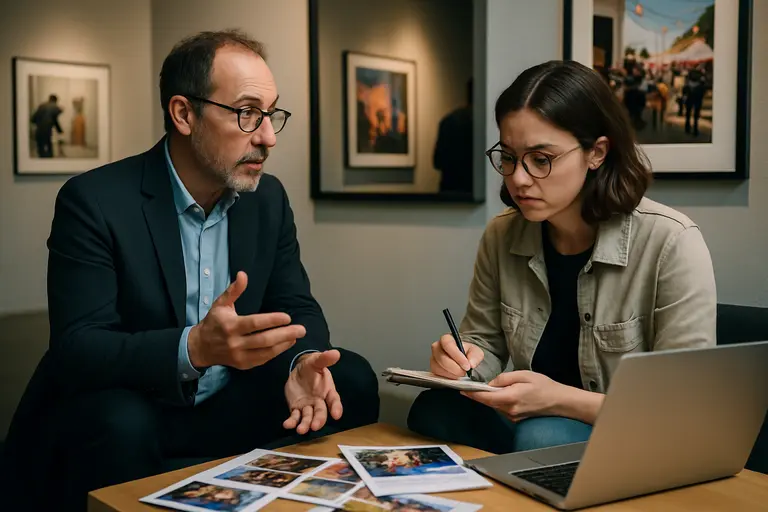
    Curator reviewing artwork labels and ownership notes at a worktable

    Beyond Museums And Major Collections

    Restitution debates often focus on museums and blue-chip works, but the evidence habits apply more broadly. Artists, costume makers, educators, set designers, illustrators, gallery assistants, online sellers, and estate managers all work with images, objects, archives, and stories. Most will never handle a contested Renaissance diptych or a wartime collection file. Even so, the same ethical discipline applies: record what is known, identify uncertainty, and avoid turning incomplete provenance into a clean origin story.

    For a gallery, that may mean preserving invoices, shipping documents, and owner statements. For a museum educator, it may mean separating an artwork’s formal analysis from its unresolved ownership history. For an artist working with archival imagery, it may mean crediting repositories accurately and avoiding claims about a source that cannot be verified. For sellers of handmade or vintage goods, it may mean keeping acquisition notes and being cautious about descriptors that imply lineage, authenticity, or historical association.

    As of September 2026, U.S. lawmakers supporting the HEAR Act revision cited more than 100,000 Holocaust-looted artworks that had not been recovered and returned to rightful owners. That figure, while broad, signals why provenance is not merely an administrative task. It is part of cultural repair, even when the process is slow, contested, and emotionally charged.

    Due Diligence Without Overclaiming

    Creative workers should avoid presenting provenance research as a guarantee unless it is backed by records strong enough to support that claim. A documented ownership chain can still contain gaps. A collector’s label may be meaningful but incomplete. An auction description may repeat earlier errors. An image match may identify a work but not resolve title. These distinctions matter because art-recovery cases often turn on the difference between plausible history and legally significant evidence.

    This caution also applies to rights and licensing discussions around reproductions, merchandise, and educational materials. A restitution statute does not by itself settle copyright, publicity, museum photography rules, or contractual permissions. Those are separate issues. Creative communities should seek qualified legal help for specific disputes, but they can still build better day-to-day habits by keeping records, naming sources, and treating contested heritage with care.

    Nazi-looted Art Laws For Creative Communities

    Practical Lessons For Arts Workers

    The strongest non-legal response for arts communities is a culture of documentation. A studio, gallery, archive, or small seller does not need a courtroom dispute to justify better records. Date acquisitions. Save correspondence. Photograph labels and verso markings. Keep exhibition and publication references. Note uncertainty rather than erasing it. If a work’s history passes through Europe between 1933 and 1945, do not assume that silence in the record is neutral.

    • Separate confirmed facts from family stories, dealer descriptions, and later attributions.
    • Record when a work’s identity, location, and possible ownership history became known.
    • Use careful wording for disputed objects, especially in wall labels, catalogues, online listings, and educational materials.
    • Do not treat a current possessor’s good-faith purchase as the end of the inquiry where covered claims may exist.

    For readers who follow creator-commerce and arts business coverage across related sites, Shimply provides insight into why these legal shifts matter beyond museum law: the creative economy depends on trust in attribution, sourcing, and representation.

    Nazi-looted Art Laws do not ask artists and sellers to become judges. They do ask cultural workers to respect the record. The ethical task is to slow down where a story is incomplete, preserve evidence before it is lost, and avoid promotional certainty when the history of an object may involve coercion, dispossession, or persecution. That posture serves heirs, institutions, scholars, and living creative communities alike.

  • Matisse Portrait Exhibition Extends Color Study

    Matisse Portrait Exhibition Extends Color Study

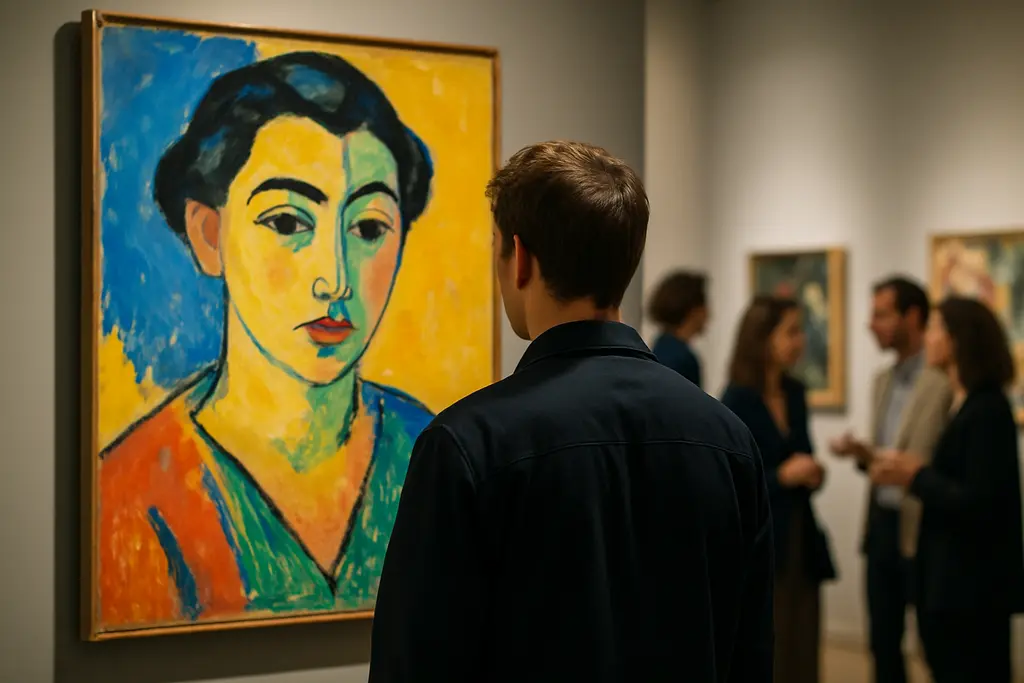
    The Matisse portrait exhibition at SFMOMA has become more than a single-painting display. Running from May 16 to September 27, 2026, on Floor 4, Matisse’s Femme au chapeau: A Modern Scandal was extended from its earlier September 13 closing date after SFMOMA cited popular demand; the museum lists it as a timed, surcharged exhibition with weekday tickets at US $10, weekend and holiday tickets at US $12, and free access for members on its official exhibition page.

    That extension matters because the show is not framed only as a look at Henri Matisse’s famous 1905 portrait. SFMOMA’s program notes, as provided in the research record, place the painting inside a wider sequence of public events, family workshops, member access periods, and color-centered studio activity. For a museum audience, that combination turns a controversial modernist object into a social setting: a place where close looking, playful making, and art-historical staging sit in the same institutional frame.

    Matisse Portrait Exhibition And The Extension Context

    Why The Matisse Portrait Exhibition Was Given More Time

    The revised closing date, September 27, 2026, gives the exhibition two additional weeks beyond the earlier September 13 endpoint. Because today is September 21, 2026, the exhibition has not yet closed. That makes any assessment necessarily partial, but the available schedule already shows how SFMOMA used the extension period to offer quieter access and late-program learning opportunities rather than simply leaving the galleries open longer.

    Member Last Looks were scheduled every Saturday and Sunday from 10 a.m. to noon between September 12 and September 27, 2026. Those reserved hours were limited to members and described as crowd-free times. As of September 21, the September 12, 13, 19, and 20 sessions have already taken place, while the final weekend, September 26 and 27, remained within the published extension window. This is a modest but meaningful access model: the museum did not present the extension only as extra ticket inventory, but also as a chance to shape how different audiences encounter a high-interest show.

    Timed Tickets, Member Access, And Audience Flow

    The ticket structure also points to a controlled visitor experience. A surcharged, timed-ticket format can limit congestion around a focused exhibition, although the research provided does not include attendance figures, gallery capacity, or visitor satisfaction data. It would be premature to claim that the format succeeded in reducing crowd pressure. What can be said is narrower and more reliable: SFMOMA set different prices for weekday and weekend or holiday entry, gave members free access, opened member sales before public sales, and held member previews from May 14 to May 16, 2026.

    Those access layers are common in major museum programming, yet here they carry interpretive weight. Femme au chapeau is a painting associated with color shock and public reaction. Slowing the act of viewing through timed entry and dedicated member hours may help visitors spend more time with surface, hue, gesture, and historical setting. That is an observational reading of the structure, not a claim about individual visitor behavior.

    Programs That Framed Color As Public Practice

    Making, Hats, And The Museum As Studio

    The public program record shows that SFMOMA treated color and costume not as decorative extras, but as entry points into the exhibition’s ideas. A Hat Party on Sunday, May 17, 2026, opened the program sequence by inviting visitors to wear favorite hats and make hats from recycled materials. The reference was direct enough to be legible, since the portrait is defined in public memory by its sitter’s hat, yet the activity also shifted attention from passive viewing to bodily expression.

    A Free Community Day followed on Sunday, May 24, 2026, with free admission and programming across the museum. The research does not give attendance totals or a demographic breakdown, so no claim should be made about reach beyond the fact of free access and museum-wide programming. Still, as a curatorial gesture, placing a charged modernist painting inside a free public day softens the barrier between canonical art history and everyday creative play.

    The later studio programs sharpened that educational angle. Family Studio: Matisse Landscapes took place on Sunday, September 13, 2026, from 10 a.m. to 1 p.m. in the Koret Education Center on Floor 2. It was free for families and did not require museum admission for that program. A Modern Scandal: An Evening of Art Making took place on Thursday, September 17, 2026, from 6 to 8 p.m. in the White Box on Floor 4, with hat crafting, portrait painting, and unconventional drawing included with admission. On Sunday, September 20, 2026, the Watercolor Workshop: Feeling First, a Matisse Study was scheduled at 2 p.m. in the Koret Education Center for ages 14 and up, pairing a close-looking tour of Femme au chapeau with guided color study and watercolor painting.

    What The Program Sequence Suggests About Learning

    For the Matisse portrait exhibition, these programs suggest a layered model of public learning. Younger visitors and families were offered low-barrier making. Older teens and adults were invited into a more skill-based watercolor format. Evening audiences were given a social art-making environment tied to portraiture and experimental drawing. None of this proves impact, but it does show deliberate variation in format, age range, and level of instruction.

    That matters for a painting whose early notoriety came from how it challenged established taste. The programs did not ask audiences simply to accept the painting as famous. They invited them to test color decisions, exaggeration, material choice, and self-presentation through their own hands. In museum education terms, that is a practical way to connect art history with sensory evidence.

    Historical Staging Around Femme Au Chapeau

    Reconstructing A 1905 Flashpoint

    The exhibition’s historical elements appear designed to place the portrait back into the social spaces that shaped its reception. According to the research record, SFMOMA included projections of the Grand Palais and Leo and Gertrude Stein’s Left Bank apartment. It also restaged a reconstruction of the Salon d’Automne’s Gallery VII as it appeared in 1905, reuniting the same artists shown then, including Matisse’s peers who provoked controversy.

    This approach is useful because scandal in art history is rarely produced by a single canvas alone. It arises through rooms, critics, collectors, peers, display conventions, and public expectation. By reconstructing a gallery setting and referencing the Stein apartment, the show appears to frame Femme au chapeau as an object that moved through systems of looking and judgment. That is a more responsible interpretive path than reducing the painting to a simple story of shock.

    Peers, Later Artists, And Influence With Limits

    The research notes identify contemporaries of Matisse in the exhibition, including André Derain, Albert Marquet, and Maurice de Vlaminck. They also name later artists such as Hilary Harkness, Rachel Harrison, David Hockney, and Bay Area figures Joan Brown, Richard Diebenkorn, and David Park. The show is described as tracing how Femme au chapeau influenced both its era and later artistic practice.

    Influence, however, should be handled carefully. Without detailed object-by-object comparisons, it is safer to say that the exhibition places Matisse’s painting in conversation with works by peers and later artists rather than claiming direct influence in every case. That distinction respects the artists and avoids turning art history into a chain of unproven imitation.

    Color, Costume, And Creator Culture

    Handmade hats and watercolor tools arranged for a creative workshop

    What Artists And Makers Can Responsibly Take From The Show

    The Matisse portrait exhibition has clear relevance for costume culture, handmade objects, and creator-commerce audiences, but that relevance should be framed with care. The public programs encouraged hats, recycled materials, watercolor studies, and portrait experiments. Those are broad creative prompts. They are not a license to reproduce protected images, market copied museum works, or imply affiliation with SFMOMA or the Matisse estate.

    For independent makers, the stronger lesson is formal rather than extractive: study how color can carry emotion, how an accessory can alter a portrait, and how public display changes an object’s meaning. Those are transferable creative questions. Readers who track maker markets and adjacent culture coverage across this network may also find related creator-commerce context at Shimply, especially when thinking about handmade presentation, audience fit, and responsible product framing.

    This distinction is not legal advice. It is a cultural caution. Museum exhibitions can inspire study, sketching, teaching, and conversation, but commercial reuse of images, artist names, or likenesses can raise rights questions that require case-specific review. A respectful response to Matisse’s example begins with looking closely, then making work that reflects one’s own decisions rather than borrowing the authority of a famous painting.

    Matisse Portrait Exhibition As A Color Commons

    A Careful Reading Of The Remaining Week

    As of September 21, 2026, the final days of the exhibition were still ahead, with the published closing date set for September 27. The Matisse portrait exhibition therefore sits in a brief closing phase: most announced public programs have already occurred, while the galleries and final member access weekend remain part of the active schedule. Any later assessment would need confirmed attendance data, visitor accounts, or institutional reporting to judge public response beyond the museum’s stated reason for extension.

    What is supported now is a more grounded claim. SFMOMA built an exhibition around a single landmark portrait and expanded it through timed access, historical reconstruction, family activity, evening making, and watercolor study. That structure treated color as both an art-historical problem and a public practice. For a painting once associated with scandal, the 2026 presentation offered a calmer but still energetic proposition: color can disturb expectations, invite play, and create shared attention inside a museum setting.

  • Halumii Ktapihna At MCNY: A Culture Preview

    Halumii Ktapihna At MCNY: A Culture Preview

    Halumii Ktapihna: Lenape Legacies and Futures is scheduled to open to the public at the Museum of the City of New York on September 25, 2026, with a press preview set for September 22, 2026. Because today is September 21, 2026, any responsible preview has to speak in advance, not as if visitors have already formed a public response. What can be assessed now is the exhibition’s stated structure: a show built around Lenape identity, cultural continuity, displacement, land, language, and future-making.

    For community arts organizers, that framing matters. Museum exhibitions about Native nations can either repeat older habits of speaking about communities from the outside, or they can make space for living voices, contemporary artists, and community advisors. The available information suggests that this exhibition is designed around the latter approach, while still requiring careful attention from critics, educators, and visitors who enter a museum setting shaped by long histories of collecting and interpretation.

    Why Halumii Ktapihna Matters At MCNY

    Halumii Ktapihna And A Shared Museum Frame

    According to the Museum of the City of New York, the exhibition includes work by over 30 artists alongside archival materials, historic objects, videos, and interactive listening stations, and it was developed in collaboration with the Éenda-Lŭnaapeewáhkiing (Land of the Lenape) Collective and Lenape/Lunáapeew community advisors from the United States and Canada MCNY exhibition page. That collaboration is central to how the show should be read before opening: not simply as a museum display of cultural material, but as a public cultural project shaped by contemporary Lenape participation.

    The exhibition is staged at the Museum of the City of New York, located at 1220 Fifth Avenue at 103rd Street in Manhattan, as reported in coverage of the opening Manhattan location report. The site is not incidental. A museum devoted to New York City carries a particular responsibility when presenting Lenape histories and futures, since the city occupies Lenape homelands. A preview cannot judge the installation design before the galleries open, but it can recognize the stakes of placing this material inside a civic museum visited by residents, students, and tourists.

    Contemporary Artists Beside Historical Materials

    The value of Halumii Ktapihna may rest partly in how it places new artwork near historical objects without freezing Lenape culture in the past. The research notes identify rare artifacts such as wampum belts, historical tools, textiles, historic maps, and documents, alongside new works by Lenape artists exploring identity, sovereignty, and belonging. That combination can support a dialogue across time, if the installation lets contemporary voices carry interpretive weight rather than using living artists as a decorative add-on to historical narrative.

    This is where arts criticism should be precise and humble. Preview writing should not claim that an exhibition has succeeded before the public can see it. Still, the stated mix of artists, archival materials, video, and listening stations points toward a multi-sensory presentation. The interactive listening stations are especially significant because sound and language can resist the stillness of display cases. They may also ask visitors to slow down, listen, and understand culture as practice, not only as object.

    How The Exhibition Organizes Place, Memory, And Future

    Three Sections, Three Public Questions

    The exhibition is organized into three thematic sections: The Lunáapeew Today, Homelands, and Creating the Future. Those titles suggest a structure that resists a single chronological path. Instead of beginning and ending with colonial disruption, the exhibition appears to place present-day Lenape life at the center, then connect that presence to ancestral lands and future-facing visions. That order matters because it can shift the visitor’s first question from “What happened to this people?” to “Who is speaking now?”

    The research states that the show centers Lenape identity and culture across more than 12,000 years, including governance, trade networks, and relationships with land and water. That is a long span for any exhibition to hold. The challenge will be scale: how to communicate deep time without compressing distinct periods, communities, and practices into a single museum storyline. The three-section structure may help by separating present identity, homelands, and future imagination while still allowing them to inform one another.

    Land, Water, Language, And Stewardship

    The announced themes include land stewardship, language revitalization, resilience, displacement, and erasure. These are not abstract museum topics. They touch the ways institutions name places, collect objects, teach history, and decide whose knowledge is treated as authority. A culture exhibition built around these themes asks more of viewers than passive appreciation. It invites an ethical form of attention: visitors have to consider how city life, land use, and public memory are connected.

    Language revitalization is especially meaningful in a museum context. If students and general visitors encounter Lenape words, voices, and pronunciation practices, they are not merely learning labels for objects. They are meeting a living knowledge system. The school field trip program connected to the exhibition, Lenape Legacies and Futures, is scheduled to become available on October 13, 2026. The research notes that it will let students engage with contemporary Lenape voices, artifacts, speaking Lenape, and reflection on Native nations today. For educators, that date gives the exhibition a life beyond the gallery opening.

    What A Respectful Preview Can And Cannot Claim

    Notebook and exhibition materials on a museum bench before a gallery visit

    Evidence Before Interpretation

    Preview coverage has limits. It can describe announced dates, themes, collaborators, materials, and educational plans. It should not invent visitor reactions, assume critical consensus, or treat the exhibition as a settled achievement before it opens. That caution is not a lack of enthusiasm. It is respect for the artists, advisors, and communities whose work deserves careful response after the public installation can be experienced.

    Based on the available research, a cautious preview can say the following:

    • The exhibition opens to the public on September 25, 2026, after a September 22, 2026 press preview.
    • It is presented at the Museum of the City of New York in Manhattan.
    • It includes over 30 artists, historical materials, video, and listening stations.
    • It addresses Lenape identity, homelands, language, stewardship, displacement, and future visions.

    What a preview cannot fairly say is how well each gallery will balance art, history, and community voice. That judgment belongs to careful viewing after the installation opens. The distinction matters because exhibitions concerning Indigenous communities have often been burdened by outside interpretation. A respectful critic should let documented facts set the frame and then allow the work, artists, and advisors to meet the public on their own terms.

    Community Context Beyond The Museum Visit

    As an arts organizer, I often think about what happens after people leave a museum. A powerful exhibition can reshape a classroom discussion, a neighborhood program, a family conversation, or a local reading group. For readers who keep up with cultural coverage and seek insights from a wider network, Shimply offers a platform that connects to how creative work influences everyday lives. That broader context is useful here because this exhibition is not only an art event; it is also a civic encounter with place and memory.

    The funding notes in the research identify support from The Puffin Foundation and Valerie & John W. Rowe, along with public support from the New York City Department of Cultural Affairs and the New York State Council on the Arts. Funding acknowledgments do not determine artistic quality, but they do show that the exhibition sits within both private and public cultural support systems. That matters for accountability, access, and the educational use of museum space.

    Halumii Ktapihna As Cultural Dialogue

    A Preview Framed By Care

    For Halumii Ktapihna, the phrase “dialogue between cultures” should be used carefully. It should not imply two equal and abstract sides meeting without history. The exhibition’s announced subjects include displacement and erasure, which means the dialogue is shaped by power, land, memory, and institutional responsibility. A better way to frame it is as a museum-based encounter in which Lenape artists and advisors help define how Lenape presence, continuity, and futures are presented to a broad public.

    That is why the exhibition’s emphasis on contemporary artists matters so much. If the show keeps living Lenape voices in the foreground, it can challenge visitors who still imagine Indigenous culture mainly through the past tense. If its sections succeed as described, The Lunáapeew Today, Homelands, and Creating the Future may give viewers a way to connect identity, place, and futurity without reducing any of them to a single lesson.

    The public opening on September 25, 2026 will provide the first real test of those ambitions. Until then, the most responsible preview is one that names the evidence, respects the participating communities, and makes room for response after viewing. On the available facts, the exhibition deserves attention not as a simple cultural event on a calendar, but as a significant moment in how a New York museum presents Lenape legacies and futures within the city’s public memory.

  • Susan Te Kahurangi King: Reading The Page Before Me

    Susan Te Kahurangi King: Reading The Page Before Me

    Susan Te Kahurangi King received a focused West Coast presentation after The Page Before Me ran at James Fuentes Gallery in Los Angeles from August 1 to September 12, 2026. The exhibition has now closed, so the useful question is not whether to see it, but what the show clarified about an artist whose drawings and mixed-media works ask for slow looking, restraint, and respect.

    The exhibition mattered because it placed early and recent work in relation to one another. According to the gallery, the show covered King’s production from the late 1950s through the present, included some of her earliest drawings, and featured what the gallery described as her largest work to date. That broad time span gave viewers a rare chance to consider continuity without reducing the work to biography or novelty.

    Why Susan Te Kahurangi King Mattered In Los Angeles

    Susan Te Kahurangi King And The West Coast Context

    James Fuentes presented The Page Before Me as King’s first solo exhibition on the West Coast and organized it in collaboration with MARCH, New York. The gallery’s account also describes the exhibition as an overview of her graphic development, spanning from the late 1950s to the present James Fuentes exhibition page. Because the exhibition has already taken place, its significance is best understood through the record it left: a concentrated Los Angeles viewing of work that has been entering major institutional conversations.

    That West Coast framing is more than geographic. Los Angeles has long been a city where animation, comics, studio image-making, and experimental drawing can be seen beside contemporary art practices. The research supplied for this article supports discussion of King’s use of cartoon and comic visual culture, but it would be too strong to claim a direct relationship between the exhibition and any broad market shift without stronger evidence. A careful reading treats the show as a specific curatorial event rather than proof of a trend.

    A Biographical Frame Used With Care

    Galerie reported that King was born in 1951 in Te Aroha, New Zealand, began drawing at a young age, stopped speaking around age four, and was silent by age eight Galerie’s September art coverage. Those details are often repeated because they shape how writers introduce her work, yet they should not become a shortcut for interpretation. Silence, family care, and long-term drawing practice are relevant facts, but the drawings still deserve to be read as art objects with structure, material decisions, and visual intelligence.

    For Susan Te Kahurangi King, the page is not a passive container. The works described by James Fuentes include graphite, colored pencil, watercolor, collage, and hand-coloured elements on found or unconventional papers. Some works are double-sided, folded, creased, overlaid, or marked by physical changes in the surface. These facts support an interpretation of the work as both image and object, where paper condition can shape how a composition is seen.

    Materials In Susan Te Kahurangi King Mixed-Media Work

    Drawing As A Physical Encounter

    The strongest lesson from The Page Before Me may be material. King’s mixed-media work is not simply drawing plus added color. The gallery description points to surfaces that can be found, folded, creased, layered, or physically altered. That means the viewer is asked to look at paper as an active participant. A crease may interrupt a figure, a fold may create a new boundary, and a double-sided sheet may complicate the idea of a single front-facing image.

    This is where arts education and wellness can meet without forcing a therapeutic reading onto the artist. For students, artists, and community workshop leaders, King’s work demonstrates how attention can move through a page. Looking slowly at surface, pressure, line, and repetition becomes a form of embodied observation. It asks the body to pause, breathe, and track relationships across a sheet. That does not mean the art is made for wellness practice; it means careful viewing can support healthier habits in art spaces.

    Scale, Time, And The Problem Of Easy Labels

    The exhibition’s time span, from the late 1950s to works made near the present, resists a simple story of early promise followed by late recognition. Because the available source material states that the show included early drawings and the artist’s largest work, the safer interpretation is formal rather than speculative: the exhibition allowed changes in scale, density, and handling to be placed side by side. It did not require a single explanation for every shift.

    Labels such as outsider art, self-taught art, contemporary drawing, and mixed-media practice may each help certain institutions place the work, but none should substitute for looking. King’s inclusion in collections named by James Fuentes, including MoMA in New York, the American Folk Art Museum, the Philadelphia Museum of Art, the Institute of Contemporary Art Miami, Te Papa Museum in Wellington, the Chartwell Collection at Auckland Art Gallery, and the Art Gallery of New South Wales, indicates that several kinds of institutions have found the work significant. That fact supports the need for critical care, not a claim that the work belongs to only one category.

    Institutional Recognition And Ethical Attention

    Art students discussing works on paper in a small study group

    How Viewers Can Read Without Reducing

    Respectful criticism begins by refusing to treat an artist’s life as an explanation that closes the work down. In King’s case, the biographical facts available through arts coverage are striking, but her drawings also require attention to composition, material, and duration. A viewer can ask practical questions: Where does the eye enter the work? Which marks seem layered over earlier decisions? How does the edge of the paper affect the image? What happens when a figure, shape, or color field pushes against a fold?

    Those questions are useful because they move discussion away from spectacle. They also create better learning environments. In a classroom, studio visit, or gallery discussion group, participants can compare what they see before reaching for biography. This approach respects the artist and gives viewers of different backgrounds a way into the work without pretending to solve it.

    A Note For Creators And Sellers

    Artists, illustrators, and handmade sellers may feel inspired by the tactile intelligence of this work, but inspiration should not become imitation presented as someone else’s visual identity. A rights-conscious approach is cautious: study how materials behave, how found paper changes a drawing, or how scale affects attention, rather than copying specific images, figures, or recognizable compositional signatures. For adjacent arts education and maker-community resources, the helpful Robsonic website is part of a collaborative hub for culture-focused sites.

    This distinction matters for creator commerce. King’s practice can encourage artists to experiment with their own papers, folds, erasures or non-erasures, color layers, and physical supports, but no article can provide legal certainty about a particular derivative work, license, or fair use question. The safer cultural practice is attribution where appropriate, independent development, and a clear separation between study and commercial copying.

    What The Page Before Me Clarified About Susan Te Kahurangi King

    The Page Before Me clarified that King’s mixed-media work rewards attention to both image and support. The 2026 Los Angeles exhibition gathered a long arc of production, from early drawings to recent large-scale work, and placed that arc before viewers after decades of artistic activity. Its value lay in giving the page itself a central role: as surface, object, record, and site of visual decision-making.

    The most responsible celebration is therefore not loud praise without evidence. It is patient description. Susan Te Kahurangi King can be discussed through dates, exhibition history, materials, and institutional recognition, while still leaving room for uncertainty. Her work does not need to be simplified to be admired. It asks viewers to stay with the page long enough for line, color, paper, and pressure to become the subject.

  • Music Copyright Rulings and Industry Risk

    Music Copyright Rulings and Industry Risk

    The recent music copyright rulings of 2026 did not move in one simple direction. By September 17, 2026, courts had narrowed one path for holding internet service providers liable, treated an AI-music training dispute as a serious licensing matter in Germany, examined how business-service revenues feed royalty calculations, and rejected key claims tied to a widely used reggaeton rhythm theory. For artists, labels, platforms, organizers, and small creative sellers, the shared lesson is caution: rights questions are becoming more specific, not easier.

    As someone who spends a great deal of time around local artists, music workers, and community events, I read these cases less as abstract doctrine and more as pressure points in cultural life. A court ruling can change how a streaming service prices risk, how a composer clears samples, how an AI tool markets itself, or how a community festival handles recorded music. None of these rulings should be read as legal advice for a particular artist or event. They do, however, show where industry participants are likely to ask sharper questions before releasing, licensing, remixing, or distributing music.

    Why Music Copyright Rulings Changed Risk Allocation

    Music Copyright Rulings And Intermediary Liability

    On March 25, 2026, the U.S. Supreme Court decided Cox Communications, Inc. v. Sony Music Entertainment. According to the research record, the Court unanimously held that an internet service provider could not be held contributorily liable based only on knowledge of user infringement and a failure to terminate accounts. The research notes state that liability required inducement of infringement or a service shaped for that infringing purpose.

    That point matters because the case involved a lower court judgment tied to a $1 billion statutory damages award against Cox. The 2026 ruling did not bless infringement by users, and it did not erase copyright enforcement against direct infringers. It did make the path against a neutral access provider narrower. These music copyright rulings shift attention from broad awareness of infringement toward proof of intent, design, or encouragement.

    Why The Cox Result Matters Beyond Broadband

    For the music business, the Cox ruling may affect how rights holders evaluate claims against intermediaries. A platform, service provider, or access company may still face scrutiny, but the research record points to a heavier burden for plaintiffs in the United States where secondary liability is at issue. That could influence settlement pressure, rights-monitoring programs, and the language companies use in repeat-infringer policies.

    For community-facing arts groups, the practical lesson is not to ignore permissions. The safer reading is narrower: a case about an internet service provider does not create a general permission slip for public use of music, nor does it answer questions about live performance, recorded tracks at events, samples, or merchandise. A neighborhood dance night, gallery fundraiser, or artist market still needs careful rights review from qualified counsel or licensing professionals when music is central to the event.

    How Music Copyright Rulings Reached AI Training

    The Suno Decision And Licensed Repertoire

    On July 31, 2026, Munich Regional Court I ruled that the AI-music generator Suno violated copyright by training models on six specific works from GEMA’s repertoire without licenses, according to the research provided. The six works named in the research were Atemlos durch die Nacht, Rasputin, Big in Japan, Forever Young, Daddy Cool, and the chorus of Mambo No. 5. The research also states that Suno had to stop reproducing those works for U.S. training and in Germany through outputs, while damages had not yet been quantified.

    That ruling has special force for creators who use AI tools in composition, mockups, advertising audio, or fan-community projects. It does not answer every question about generative music, and it came from a German court rather than a U.S. court. Still, it treated training and output as areas where specific protected works can matter. For readers following related disputes, our prior analysis of the Suno AI music case gives context on why rights holders and AI developers are likely to keep pressing these questions.

    Music Copyright Rulings And Creator Commerce

    Small sellers and event producers should be especially careful not to assume that an AI-generated track is free of rights concerns. The research notes include GEMA’s claim that Suno users generated around 7 million tracks per day globally, with about 75,000 uploaded daily to streaming services. Because that figure is presented as a claim, not an independently resolved court finding in the provided notes, it should be treated cautiously. Even so, the scale alleged by GEMA shows why licensability, provenance, and documentation are becoming practical business questions for music creators.

    A handmade seller, cosplay performer, or local arts organizer may not see themselves as part of the recording industry. Yet music often sits inside product videos, runway walks, rave flyers, short-form promos, and artist-reel edits. The safest cultural practice is to credit collaborators, ask what rights are needed, preserve records of licenses, and avoid presenting uncertain AI outputs as cleared commercial music. For more on community and arts organization insights, related perspectives can be found at Kay Granger’s website.

    Royalty Bases, Rhythms, And Cultural Credit

    Turntable, percussion instruments, and accounting notes on a table

    The Music Choice Revenue Dispute

    On August 18, 2026, the D.C. Circuit published an opinion in Music Choice v. Copyright Royalty Board concerning what counted as “gross proceeds” for calculating royalties for business services that transmit copyrighted sound recordings. The research notes say Music Choice argued that only revenue tied strictly to business services should count, while SoundExchange argued for a broader revenue base. The court record is available through the D.C. Circuit opinion, and Stanford’s Copyright and Fair Use Center also lists the matter in its Music Choice case entry.

    This kind of dispute can sound technical, but revenue-base definitions can affect how money moves to rightsholders. If a royalty formula turns on what counts as relevant proceeds, then accounting categories become cultural infrastructure. Artists may never read a royalty board filing, but they can feel the result through statements, licensing terms, and negotiations shaped by those definitions.

    The Reggaeton Rhythm Ruling

    On September 1, 2026, U.S. District Judge André Birotte Jr. ruled that plaintiffs in a reggaeton “dembow” lawsuit failed to show ownership of a valid copyrighted work or a specific protectable combination of rhythm, according to the research record. The lawsuit, filed in 2021 by Cleveland “Clevie” Browne and heirs of Steely & Clevie, named more than 150 defendants, including artists such as Bad Bunny. The tracks identified in the lawsuit included Despacito, Tití Me Preguntó, and Dame Tu Cosita.

    The ruling is culturally sensitive because genre-building rhythms often carry shared histories, migrations, club practices, studio lineages, and community memory. A court’s treatment of protectability is not the same as a cultural judgment about influence or credit. Artists and critics can recognize ancestry, borrowing, homage, and rhythmic lineage while still treating copyright claims as a separate legal question. That distinction is especially important in genres built through dance floors, sound-system cultures, remix habits, and international collaboration.

    Music Copyright Rulings For Artists And Organizers

    Taken together, the 2026 cases suggest a more evidence-heavy period for music disputes. Plaintiffs may need clearer proof of intent against intermediaries, more specific claims around protectable musical elements, and better documentation of how revenue should be counted. AI-music companies may face sharper demands to explain training sources and licensing practices, especially where identified works are alleged to have been used without permission.

    For working artists and community organizers, the most useful response is not fear. It is better recordkeeping and clearer communication. Keep track of collaborators. Save license terms. Separate inspiration from imitation. Ask whether recorded music, samples, AI outputs, or public-performance uses require permission. Respect scenes and lineages even where the law does not provide a simple claim. Music thrives through exchange, but trust depends on credit, consent, and fair dealing wherever those can be established.

    The hard part is that copyright rulings rarely speak in the warm language of creative communities. They speak through liability standards, revenue definitions, protectability tests, and remedies. Clara Winslow’s arts-organizing lens makes one point clear: the law may set the outer boundary, but artists and communities still shape the ethics of how music is made, shared, credited, and paid for.

  • Summer of Moomin: NYBG Schedule Recap 2026

    Summer of Moomin: NYBG Schedule Recap 2026

    Summer of Moomin at the New York Botanical Garden is no longer an upcoming schedule item. As of September 15, 2026, the display had concluded, with its published run ending on September 13, 2026. That timing matters because coverage of family programs, artist-centered exhibitions, and character-based garden events can easily drift into present-tense promotion after the doors have closed. A careful recap is more useful now: what happened, when it happened, and how the event framed Tove Jansson’s work for a garden audience.

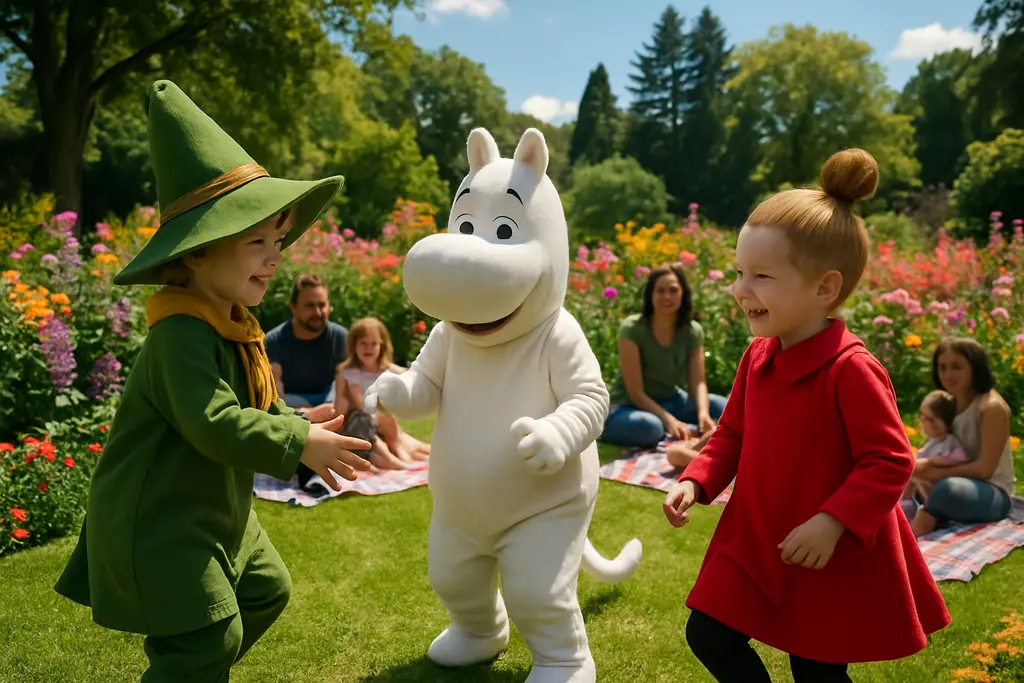
    The display ran at the Everett Children’s Adventure Garden from May 23, 2026, through September 13, 2026, according to the New York Botanical Garden’s official event page. Its central setting was a Moominvalley-inspired environment with a clue-based quest, hands-on nature crafts, character photo opportunities, quotations, interactive elements, plants and flowers, and themed installations. The public-facing structure blended children’s garden interpretation with literary illustration, placing Jansson’s nature-driven imagination inside an outdoor learning site rather than a conventional gallery room.

    Summer of Moomin Schedule, Recast as a Recap

    Summer of Moomin Dates And Status

    The core calendar was straightforward: the display opened on May 23, 2026, and closed on September 13, 2026. That end date also hosted the principal closing-day program, Moomin Fest, which took place from 1:00 p.m. to 5:00 p.m. at Daffodil Hill and Ross Hall. Because September 13, 2026, has already passed, descriptions of that program should be read as historical rather than as a prompt to attend.

    Moomin Fest gathered several timed and drop-in activities into a single afternoon. The schedule included drop-in cartoon and nature illustration sessions at 1:15, 2:15, 3:15, and 4:15 p.m.; naturalist guided walks at 2, 2:30, 3, and 4 p.m.; an herbarium specimen workshop; a meet-and-greet photo opportunity with Moomintroll; and craft and nature-based games. The range suggests that NYBG treated the closing event not only as character programming but also as a bridge between drawing, observation, plant study, and family participation.

    Passed Weekend Programs

    A separate special program, Moomin’s Day Weekend, occurred on August 8 and 9, 2026, from 12:00 to 5:30 p.m. at the Edible Academy. A contemporary events preview reported a ticket-pricing snapshot for that weekend: children ages 2–12 were listed at $17, students and seniors at $35, and adults at $39, as noted by This Week in New York. Those figures should be treated as historical pricing for that program, not as current admission guidance.

    How Tove Jansson’s Garden Setting Worked

    Nature, Drawing, And Character Encounter

    Tove Jansson, who lived from 1914 to 2001, is identified in the research materials as the creator of the Moomins, with a career spanning nearly seven decades as an author, illustrator, and painter. The NYBG presentation emphasized her connection to nature, which made the Everett Children’s Adventure Garden an apt setting. A botanical garden can make the ecological side of an illustrated world tangible: paths, flowers, sensory cues, and small acts of observation allow visitors to encounter an invented valley through real plant life.

    That interpretive choice also shaped the tone of the display. Instead of treating the Moomins only as recognizable characters, the garden program appears to have linked them to the habits behind visual storytelling: looking closely, sketching, tracing clues, and reading environments. The cartoon and nature illustration sessions at Moomin Fest are especially telling. They joined image-making to outdoor study, placing drawing in conversation with specimens, guided walks, and hands-on craft.

    What The Event Calendar Shows

    From Display Run To Festival Day

    The calendar gives a clear example of how a cultural institution can pace a character-based exhibition across several months. The long display period allowed repeat family visits and seasonal discovery, while the special weekend in August and the September festival added date-specific reasons to return. This format is familiar across public gardens and museums: the environment carries the daily experience, and scheduled programs add concentrated moments of performance, making, or guided interpretation.

    • May 23, 2026: display opened at the Everett Children’s Adventure Garden.
    • August 8–9, 2026: Moomin’s Day Weekend took place at the Edible Academy.
    • September 13, 2026: Moomin Fest ran from 1:00 p.m. to 5:00 p.m.
    • September 13, 2026: the display closed at NYBG.

    The supplied research also identifies other NYBG exhibitions scheduled after the Jansson display: Día de los Muertos Trail from October 3 to November 2, 2026; Holiday Train Show® from November 14, 2026, to January 10, 2027; and a KAWS garden-wide installation from May 22 to October 24, 2027. Those listings sit beyond the closed Moomin program and should be checked against NYBG’s own calendar before anyone makes plans, since schedules and admission details can change.

    Creator Culture And Rights-Aware Fan Making

    Handmade costume accessories and sketchbooks arranged on a craft table

    Costume, Illustration, And Careful Attribution

    A display like this naturally touches costume culture, handmade gifting, and fan creativity. Character photo moments, nature crafts, and illustration sessions can inspire visitors to draw, dress up, or make objects at home. Cultural enthusiasm, though, benefits from careful attribution. Jansson’s authorship should remain visible, and creators selling goods inspired by well-known characters should avoid assuming that public affection equals commercial permission.

    This is not legal advice, and the available research here does not establish licensing terms for individual sellers or makers. A cautious creator-commerce stance is simpler: distinguish personal tribute from commercial use, avoid implying official endorsement, and seek rights-clearance information from appropriate owners or platforms before selling character-based work. Readers interested in adjacent costume and fantasy-fashion discussion can also follow fantasy fashion coverage within the same network, where aesthetic influence can be discussed without erasing artists’ rights.

    Summer of Moomin After The Final Weekend

    Summer of Moomin now belongs to NYBG’s 2026 event record rather than its forward calendar. Its strongest cultural value, based on the published schedule, was the pairing of Jansson’s illustrated world with botanical learning: quests, plants, guided walks, drawing sessions, and family craft all pointed toward close attention to nature. For an audience of children and caregivers, that combination likely mattered more than spectacle alone. It invited visitors to read a garden as a story space, and to read a story world through plants, weather, paths, and observation.

    The evidence available supports a modest assessment. NYBG presented a time-limited Moominvalley-inspired display from May 23 through September 13, 2026, and closed it with a programmed festival day. It honored Jansson’s work as an author, illustrator, and painter, while placing nature at the center of the visitor experience. Any future return of the concept is not confirmed in the provided research, so the responsible record is retrospective: dated, specific, and respectful of the artist whose imagination shaped the event.

  • Fall 2026 Aesthetics Across Fashion And Art

    Fall 2026 Aesthetics Across Fashion And Art

    Fall 2026 Aesthetics are less about one dominant look than a set of related signals: ornament, exposed structure, historical reference, tactile surfaces, and a renewed interest in objects that feel handled rather than polished beyond recognition. As of September 15, 2026, the strongest evidence comes from fashion reporting on the Fall 2026 runway season and editor-led trend analysis, rather than from long-term sales data. That means the mood is visible, but its reach into everyday wardrobes, interiors, and creator commerce still deserves caution.

    The useful question is not whether every shopper will wear sheer dresses, brocade, or dramatic collars. Most will not. The more grounded reading is that designers and stylists are testing a move away from quiet minimalism and toward surfaces with memory: beading, lace, shearling, aged texture, and shapes that borrow from earlier periods without recreating them literally. For visual artists, costume makers, stylists, and small sellers, the shift may matter because it changes what audiences are trained to notice: edges, trims, proportion, fabric behavior, and the relationship between clothing and character.

    Why Fall 2026 Aesthetics Feel Ornamental Again

    Reading Fall 2026 Aesthetics Through Decoration

    One of the clearest reported signals is renewed interest in Art Deco references. Who What Wear’s fall 2026 fashion reporting points to Art Deco revival through beading, geometric pattern, brocade, jacquard, and decorated surfaces, based on commentary from fashion newsletter writers and runway observers Who What Wear trend analysis. That is a precise aesthetic cue, not a general claim that the 1920s have simply returned.

    For artists and makers, the distinction matters. Art Deco influence can appear through symmetry, stepped geometry, metallic accent, or surface rhythm without copying a specific historic garment or artwork. The present interest seems to sit in atmosphere rather than reconstruction: a brocade jacket, a beaded evening surface, a geometric accessory, or a print that suggests architectural order. This is where fashion crosses into visual composition. A garment becomes a moving panel of light, shadow, pattern, and texture.

    Ornament Without Nostalgia As Costume

    The risk with any revival language is that it can flatten history into a mood board. Art Deco emerged from specific social, industrial, and design conditions; Fall 2026 references are selective, market-facing, and often mixed with modern silhouettes. A cautious reading should treat ornament as a current design strategy rather than proof of broad cultural return to one decade.

    This approach also helps creators avoid lazy imitation. A handmade seller, illustrator, or costume designer can study period features—line, spacing, contrast, repeat, and material sheen—while developing original work. The more sustainable lesson is not “copy Deco,” but “understand why geometry and surface detail are carrying visual weight again.”

    Body, Proportion, And Historical Costume Cues

    Sheer Layers And Second-Skin Dressing

    Vogue’s report on the Fall 2026 season identified a shift toward sensuality and the body on display, citing sheer layers, second-skin dresses, lingerie-inspired slips, and peekaboo mesh among the visible runway directions, with examples including Alaïa, Valentino, and Khaite Vogue’s Fall 2026 report. This is not new in fashion history, but the timing is notable after seasons in which coverage and protective dressing held strong editorial attention.

    For visual culture, body-conscious fashion changes the role of silhouette. The garment may become less of a shell and more of a filter: transparent, layered, stretched, or interrupted. In photography, illustration, and styling, that creates a focus on contour and negative space. In costume culture, it also raises practical questions about comfort, consent, fit, and context. Revealing dress is not one message; it can read as theatrical, intimate, severe, romantic, or commercial depending on styling and setting.

    Medieval Romance, Poetcore, And Scale

    The same Fall 2026 reporting has pointed to romantic medieval and “poetcore” motifs: lace, bustles, trimmed cuffs, cravats, and literary or folklore-inflected drama. These cues sit near fantasy fashion and costume culture, where historical fragments often become expressive tools. The most credible reading is not that medieval dress is being revived in an academic sense. Instead, designers are drawing from mood, proportion, and detail: a cuff that frames the hand, a bustle that changes the back view, or a cravat that turns the neck into a focal point.

    Unusual proportions also appear in the research, including shorter jackets, crop lengths, dropped waists, and tension between large outerwear and narrower forms. This is a practical styling issue as much as an aesthetic one. A small jacket can make a skirt feel longer. A broad collar can frame the face like a portrait device. A dropped waist can shift attention from torso to hip. These choices affect how the body is read in motion and in still images.

    Texture, Outerwear, And The Move Beyond Minimal Surfaces

    Warmth As A Visual Signal

    Fall 2026 Aesthetics also show up in outerwear. The research notes point to warm, bulky coats, shearling textures, and dramatic collars. That may sound purely seasonal, but outerwear is often where a trend becomes legible to people who do not follow runway detail. A collar can create silhouette from a distance. Shearling can signal softness before touch. Heavy coats can make fantasy, utility, and protection sit in the same image.

    This matters for artists because texture is one of the easier signals to translate across media. A painter may read shearling as broken mark-making. A photographer may use it to catch side light. A costume maker may use collar scale to frame a performer’s face on stage. A small seller may interpret the cue through removable cuffs, collars, brooch placement, or textile accessories rather than full garments.

    Statement Accessories And Creator Interpretation

    Statement accessories, including brooches, bowties, and jewelry, are also part of the reported season. Their importance should not be overstated without sales proof, but accessories are often where runway ideas become accessible. They allow a wearer to test ornament, scale, and historical reference without changing an entire wardrobe.

    • Brooches can add texture and asymmetry to coats, jackets, and knitwear.
    • Bowties and cravats can connect suiting with romantic or literary styling.
    • Textured jewelry can echo aged metal, beading, or geometric ornament.
    • Layered collars and cuffs can bring costume influence into daily dress.

    For makers, this is a place to be careful with rights and attribution. Historic motifs, general shapes, and material techniques can inspire original design, but copying a living artist’s recognizable work, a brand’s protected mark, or a copyrighted character for sale can create risk. This is not legal advice; it is a reminder that aesthetic influence and rights clearance are separate questions. The same caution applies to fashion-art projects, a concern that also appears in related coverage of luxury art collaborations.

    Fall 2026 Aesthetics Beyond The Runway

    Warm interior corner with wood, stone, textiles, and handmade decorative objects

    Interiors, Graphics, And The Tactile Mood

    Although the approved source links here focus on fashion, the research notes for interiors and design point in a compatible direction: warmth, layered rooms, natural materials, aged metals, handmade surfaces, and collected objects. Because those claims come from separate design-sector reporting, they should be treated as parallel evidence rather than proof of one unified cultural movement. Still, the overlap is worth observing. Fashion’s brocade, lace, beading, and shearling sit comfortably beside interiors that favor wood, stone, plaster, and vintage objects.

    Fall 2026 Aesthetics, then, can be read as a push toward visible touch. The surface should do something: catch light, suggest age, show weave, frame the body, or interrupt plainness. That does not mean minimalism has vanished. It means minimalism is no longer the only language receiving serious attention in seasonal style reporting.

    How Small Sellers Can Respond Carefully

    For creator commerce, the most useful response is interpretation, not replication. Sellers can create original accessories using geometric balance, textured surfaces, warmer color, and sculptural proportion. They can also describe work honestly: “geometric beaded collar” is clearer and safer than implying affiliation with a designer, estate, film, or fashion house. For readers comparing style notes across the same publishing network, Shimply offers a related reference point for adjacent lifestyle coverage.

    Evidence-based trend writing should also leave room for uncertainty. Editorial coverage can identify what appeared on runways and in expert trend reports, but it cannot guarantee adoption across regions, budgets, sizes, or subcultures. A runway cue may become a mass-market accessory, remain a luxury styling idea, or be absorbed by costume communities in altered form. The clearest takeaway is that surface and silhouette are doing more expressive work than they did during the strongest phase of quiet minimalism.

    What Fall 2026 Aesthetics Mean For Fashion And Beyond

    Fall 2026 Aesthetics point toward decorated surfaces, historical fragments, body-aware silhouettes, warm outerwear, and tactile design. The stronger claims are limited to what has been reported: Art Deco references, sensual layering, romantic medieval cues, dramatic collars, proportion play, and statement accessories. The broader cultural reading is more cautious. These signals suggest a renewed appetite for clothing and objects that feel expressive, textured, and composed.

    For artists, stylists, educators, and makers, the season offers useful study material. Look at how a collar frames a face, how lace changes an outline, how brocade holds light, and how an accessory can shift a plain garment into a character study. The strongest creative response will not be a copied trend, but an informed visual decision: one that understands reference, respects communities, and builds original work from observed form.