I found no verifiable, source-linked Seller Social Club forecast in the supplied research, so this reading treats the phrase with caution rather than presenting unsupported proprietary claims. What can be assessed is the wider evidence around Retro Fashion Trends, especially the return of 1990s and Y2K-coded shapes in resale, denim, bags, and community commerce. The 1980s signal is present in the research notes, but the strongest cited evidence here comes from Depop and Circana, so the analysis weights the 1990s and early-2000s revival more heavily.
That distinction matters for sellers, stylists, costume makers, and festival communities. Nostalgia is not a single mood. A low-rise jean, a small shoulder bag, a bandage dress, and a wide jort do not carry the same cultural message. Each item asks a seller to decide whether they are presenting period reference, personal styling, subcultural memory, or a new remix. Evidence helps keep those choices grounded.
What Retro Fashion Trends Can Prove
Retro Fashion Trends And The 1990s Signal
Depop’s 2026 trend report, published on December 19, 2025, described “Neo Nostalgia” through sharp increases in search interest for distinct past-era items, including JNCO jorts at +495%, medieval stylings at +240%, and bandage dresses at +542%. The same report said about 65% of people were drawn to styles or items from past eras, with 58% of environmentally concerned consumers also feeling that pull.
Those figures do not prove that every 1990s reference is commercially safe or culturally meaningful. They do show that past-coded items were not just decorative references by late 2025. They had become search behavior. For a seller community, that is a more useful signal than a mood-board claim because search interest points to active curiosity, comparison, and potential buying intent.
The Weaker 1980s Evidence
The supplied research notes included 1980s references, including luxury styling, baggy suiting, gold cuffs, shoulder emphasis, and maximalist runway cues. Yet the linkable evidence permitted for this review centers more clearly on resale nostalgia and denim-led Y2K revival. For that reason, any claim that 1980s fashion is returning with the same measurable force as 1990s and Y2K style should be treated as tentative unless Seller Social Club or another cited source publishes its own data.
This does not make the 1980s thread irrelevant. It simply means the evidence is less direct in this source set. A careful seller might test shoulder structure, high-shine accessories, wider belts, and polished evening references without assuming that all 1980s-coded pieces will perform equally. The stronger finding is not “the 80s are back.” It is that past-era styling is being selectively reactivated.
Why Nostalgia Sells Without Becoming A Copy
Community Taste And Emotional Memory
Nostalgia works because clothes hold memory: school photos, music videos, older siblings’ wardrobes, club flyers, mall retail, family albums, and festival looks. For live-event and costume communities, those cues can become shared language. A pair of wide jeans or a compact shoulder bag can signal era reference without needing to reproduce a specific performer, brand campaign, or copyrighted character.
This is where sellers should be precise. Referencing a decade is different from copying a protected logo, celebrity likeness, or identifiable artwork. This is not legal advice, and individual cases vary, but careful rights clearance is part of responsible creator commerce. Sellers who work with handmade gifts, rave looks, cosplay-adjacent styling, or fan-inspired pieces should separate broad aesthetic influence from direct replication.
For readers tracking how selective revival appears across culture, NextClues has also assessed 2016 fashion trends in 2026 culture, where the key issue is similar: a revival rarely returns as a full copy of its first moment.
How Sellers Can Read The 80s And 90s Signal
Inventory Choices For Creator Sellers
Circana’s nostalgia retail analysis, published on July 22, 2026, reported that women’s low-rise denim was the fastest-growing type in jeans from January through May 2026. It also said capri jeans rose 7% in dollar sales over the 12 months ending May 2026, small shoulder bags rose 24% in dollar sales during that same 12-month period, and Y2K performance running shoes drove 9% year-to-date growth to May 2026 as lifestyle footwear.
For Seller Social Club readers, those numbers support a practical point: Retro Fashion Trends are not only about statement outfits. They also appear in repeatable product categories. Denim, small bags, and lifestyle footwear are easier to style across everyday settings than a full period costume. That makes them useful for sellers who need items that can move between casual wear, market stalls, music nights, and content shoots.
Use era labels carefully: “1990s-inspired” or “Y2K-coded” may be clearer than claiming a piece is vintage if provenance is uncertain.
Separate silhouette from source material: wide legs, capri lengths, and compact bags can be styled without imitating a protected work.
Track item-level demand rather than decade-level hype, since one revived product category may outperform another.
Explain condition, fabrication, and sizing clearly, especially for resale and handmade pieces.
The seller opportunity is not simply to chase a decade. It is to identify which cues people are already searching for, then present them honestly. Furthermore, a related site in the same network, Shimply, could provide additional insights for readers interested in broader creator-commerce dialogues, although the claims here focus on the fashion and retail evidence previously cited.
Seller Social Club’s Retro Fashion Trends Forecast
If Seller Social Club’s latest forecast argued that 1980s and 1990s references are resurging, the claim is partly supported by the outside data reviewed here. The firmest support sits with 1990s and Y2K-linked products: low-rise denim, capri jeans, small shoulder bags, jorts, and bandage dresses. The 1980s reading is plausible within the supplied notes, but less firmly documented by the two cited sources used in this article.
The most defensible interpretation is selective revival. Retro Fashion Trends are not returning as museum replicas, and they should not be treated as permission to copy artists, performers, or branded imagery. They are resurfacing as silhouettes, materials, proportions, and emotional references that buyers can adapt to personal identity and community settings. For culture workers and sellers, the task is to read the evidence, credit influence where appropriate, avoid rights shortcuts, and let the audience’s styling practices show which memories still have social force.
New York exhibitions on view on October 27, 2026, include two posthumous presentations that ask viewers to slow down around biography, iconography, and institutional framing. Celeste Dupuy-Spencer: Burning in the Eyes of the Maker is at Jeffrey Deitch in New York through October 31, 2026, while Michael Richards: Free F’All is on view at the Brooklyn Museum through June 6, 2027. Both exhibitions concern artists whose deaths shape, but should not flatten, how their work is received.
The pairing is not a claim that the two artists made the same kind of work. Dupuy-Spencer’s recent paintings, as described in exhibition materials, move through religious and mythological imagery. Richards’ central sculptural work draws on flight, martyrdom, Black military history, and spiritual reference. The shared issue is curatorial: how museums and galleries present art after an artist’s death without reducing the work to tragedy.
New York Exhibitions And Posthumous Context
Why New York Exhibitions Require Date Precision
Because both presentations were already underway by October 27, 2026, they should be discussed as ongoing exhibitions rather than future events. Jeffrey Deitch lists Celeste Dupuy-Spencer: Burning in the Eyes of the Maker in New York from September 12 to October 31, 2026, according to the gallery’s New York exhibitions page. That schedule places the show in its final days as of the date of this review.
Date precision matters in arts coverage because it affects how readers interpret access, urgency, and public record. Calling a nearly finished exhibition “upcoming” would mislead readers. A more accurate account treats the Dupuy-Spencer show as a current New York presentation with a limited remaining run, while the Richards exhibition remains open for a much longer period at the Brooklyn Museum.
Posthumous Presentation Is Not A Single Category
Posthumous exhibitions can serve different functions. Some gather late works. Some restore attention to under-seen practices. Some place a single object into a public memorial frame. The available research indicates that Dupuy-Spencer died in Los Angeles on April 10, 2026, and that Richards died on September 11, 2001, while working in his studio in the World Trade Center’s North Tower. Those circumstances are not interchangeable, and responsible criticism should avoid treating them as equivalent.
What they do share is the need for restraint. Biography can guide interpretation, but it cannot replace the visual, material, and cultural work carried by the art itself. In both cases, viewers are asked to consider how image, body, belief, and public memory interact without assuming that the artist’s death supplies a complete explanation.
Celeste Dupuy-Spencer At Jeffrey Deitch
Burning In The Eyes Of The Maker
Burning in the Eyes of the Maker presents an overview of Celeste Dupuy-Spencer’s paintings from the past four years, including works that use religious and mythological imagery. The exhibition was first shown in Los Angeles in April and May 2026 before its New York presentation, according to Arting’s exhibition entry. Among New York exhibitions now open, this one is marked by the closeness between the dates of the work, the artist’s death, and the gallery’s public presentation.
The research record also states that Dupuy-Spencer was born in New York City on December 22, 1979, and died at age 46 in Los Angeles on April 10, 2026. It identifies her work as being held by major institutions including the Whitney Museum of American Art, the Los Angeles County Museum of Art, the Hammer Museum, the San Francisco Museum of Modern Art, and the Hirshhorn Museum and Sculpture Garden. Those holdings indicate significant institutional attention, though they should not be used as a shortcut for assessing individual works.
How The Paintings Ask To Be Read
Religious and mythological imagery carries risks for casual interpretation. Such imagery can invite quick labeling: sacred, symbolic, visionary, ironic, personal, political. The more careful question is how those references operate within the paintings. Do they build drama, structure moral conflict, stage transformation, or place human figures under spiritual pressure? The available research supports the presence of these image sources, but it does not provide enough detail to assign a single interpretive key to the full exhibition.
That uncertainty is useful rather than limiting. It leaves room for close looking. Dupuy-Spencer’s show appears to sit at the intersection of recent studio production and retrospective attention, but the four-year span is not the same as a career survey. The exhibition’s force, based on the supplied facts, rests in its concentration: a recent body of work presented after the artist’s death, with imagery that reaches beyond ordinary realism into belief, myth, and heightened perception.
Michael Richards At Brooklyn Museum
Free F’All In The Rubin Pavilion
Michael Richards: Free F’All opened at the Brooklyn Museum on September 11, 2026, and is scheduled to remain on view until June 6, 2027. The research notes identify the work’s location as the Martha A. and Robert S. Rubin Pavilion on the museum’s first floor. They also state that viewing the work is included with general admission, with a suggested donation of $20 and free admission for visitors under 19.
The central sculpture, Free F’All, is described in the research as a large figure of a pilot, cast from a mold of Richards’ own body in 1997. The figure wears flight gear and is impaled with dozens of nails. That physical description is stark, but it is not merely sensational. The body, the pilot’s uniform, and the puncturing force of the nails create a field of associations around vulnerability, sacrifice, aspiration, and violence.
Flight, Martyrdom, And Public Memory
The supplied research states that Free F’All commemorates the Tuskegee Airmen, the first Black military pilots in United States history. It also identifies references to Kongolese nkisi nkondi figures and the martyrdom of Saint Sebastian. Those references create a demanding visual structure. The sculpture does not appear to use flight only as a symbol of freedom; it places flight beside wounding, history, and spiritual charge.
Richards was born on August 2, 1963, and was raised in Brooklyn and Kingston. His death on September 11, 2001, has often shaped public attention to his work, but the sculpture predates that day. That chronology matters. Free F’All was made in 1997, which means its imagery should not be read only through later events. The later history changes the conditions of reception, not the date of creation.
How To Read These New York Exhibitions Together
Shared Questions, Different Artistic Stakes
These New York exhibitions invite comparison because both are posthumous, but comparison should not collapse difference. Dupuy-Spencer’s presentation is framed around recent paintings from the final years of her life. Richards’ presentation centers on a major sculptural work made nearly three decades before its 2026 Brooklyn Museum display. One asks how to encounter a recent body of painting after sudden loss; the other asks how a work’s public meaning shifts across time, memory, and historical trauma.
For cultural readers tracking exhibitions across the same arts network, Robsonic is a related site in the same network, offering additional insights into creative communities and public events. That broader context is useful here because both exhibitions concern more than gallery attendance. They touch on how institutions create spaces for grief, study, and sustained attention without turning artists into symbols alone.
For Dupuy-Spencer, the key questions concern late paintings, religious and mythological imagery, and the ethics of viewing recent work after an artist’s death.
For Richards, the key questions concern bodily casting, aviation imagery, Black military history, martyrdom, and the changing reception of a 1997 sculpture.
Reading Against Simplification
The strongest approach is to resist a single emotional instruction. Viewers do not need to decide whether these shows are primarily memorial, historical, spiritual, political, or formal. They may be several of those things at once, depending on the object and the room. What criticism can do responsibly is keep the verified facts in place while leaving room for the artwork’s unresolved pressure.
Celeste Dupuy-Spencer And Michael Richards In New York
What The Two Presentations Clarify
The Dupuy-Spencer exhibition at Jeffrey Deitch and the Richards exhibition at the Brooklyn Museum clarify how New York institutions are presenting artists whose work now meets the public through the frame of loss. The dates, sites, and object histories are specific: Dupuy-Spencer’s show runs September 12 to October 31, 2026, and Richards’ presentation runs September 11, 2026, to June 6, 2027. Those facts provide the starting point, not the full meaning.
What remains is the viewer’s responsibility to look carefully. Dupuy-Spencer’s recent paintings, with their religious and mythological references, and Richards’ Free F’All, with its pilot body, nails, and layered iconography, both resist quick summary. They ask for time, care, and attention to context. Among New York exhibitions on view in late October 2026, they stand as serious encounters with art, memory, and the public life of images after death.
Etsy trends 2026 give makers a useful, but limited, reading of how buyers used gifting, craft, and shared celebration to express community in the three months before September 14, 2026. Etsy said its Seller Trend Report was based on U.S. signed-in user search and sales activity during that period, compared year over year, which means the report is strongest as a platform-specific signal rather than a full measure of culture everywhere Etsy Seller Trend Report.
That distinction matters for artists, shop owners, and local creative organizers. A search spike can point to curiosity, seasonal planning, or gift intent, but it does not prove that every buyer wanted the same thing. Still, the report offered clear patterns around chosen family, pets, craft nights, expressive dressing, handmade evidence, and shared tables. For creators, the most useful response is not to copy a phrase blindly. It is to ask what human behavior sits underneath the phrase, then decide whether that behavior fits the work already being made.
What Etsy trends 2026 Say About Community
How Etsy trends 2026 Frame Chosen Family
One of the report’s strongest community signals was Etsy’s “Family Reimagined” theme. Personalized friend gifts were reported up 1,400% year over year. Pet-gifting-related searches doubled, pet ornaments were up 22%, and Friendsmas party supplies sales were up 37%. Those figures suggest that some Etsy shoppers used gifting to name relationships outside the immediate household, including close friends and companion animals.
For artists and makers, the lesson is not simply “add a pet product” or “rename everything Friendsmas.” The better question is whether a product already supports recognition, memory, or ritual. A ceramic ornament, hand-lettered card, woven stocking, custom portrait, or small-batch table object may speak to chosen bonds if the listing clearly explains who it is for and how it can be personalized. That kind of clarity helps buyers understand fit without forcing makers to chase every seasonal phrase.
Why Search Spikes Need Careful Reading
Large percentage increases can be dramatic because they may start from a small base. Etsy’s figures are useful because they come from a marketplace with direct search and sales behavior, yet they still need context. A 1,400% rise in a phrase does not say how many total purchases happened, how many were repeat buyers, or whether the same behavior will continue after the fall and winter season. Creators should treat the numbers as prompts for testing language, photography, and product grouping, not as guarantees.
As a community organizer, I find this cautious reading especially helpful. Local markets, school fundraisers, studio open houses, and neighborhood gift fairs often work through relationships before keywords. Sellers can borrow the emotional insight from marketplace data while keeping their own audience in view: who gathers, who hosts, who gives, and who wants an object that marks belonging?
Gift Circles Beyond The Household
Friend Gifts, Pets, And New Rituals
The report’s friend and pet signals point toward a widened circle of seasonal care. This is not a new social fact created by Etsy, but the data showed that shoppers on the platform were searching and buying around it more visibly in the measured period. A maker who offers personalization can respond by making options easier to understand: names, dates, colors, pet features, friendship wording, or small group sets.
Precision matters. If a product is handmade, say how. If it can be customized, say what the buyer may choose and what cannot be changed. If a pet portrait or friend gift relies on a customer photograph, explain what kind of image is needed. Clear boundaries protect the maker’s time and reduce disappointment for the buyer.
Friendsmas As A Social Signal
Friendsmas party supplies sales being up 37% suggests interest in gatherings that borrow the form of winter holiday parties while centering friends. For community-based creators, that can translate into tabletop pieces, small favors, shared craft kits, menu cards, ornaments, or paper goods that help a host define an occasion.
This is where local knowledge can outperform generic trend language. A maker who sells at a neighborhood market may know whether customers gather in small apartments, church halls, shared studios, campus housing, or family homes. That knowledge can shape bundle size, price point, materials, and photography. A four-person table scene tells a different story than a banquet setup, and both may be valid if presented honestly.
Craft Nights And Visible Handwork
Craftmas As Participation, Not Just Product
Etsy’s “Craftmas” theme reported an 8,500% jump in searches for DIY activities, a 470% rise for “needlepoint bag” among Gen Z shoppers, and a 125% rise for sewing patterns for beginners. The strongest reading is that some buyers wanted participation as part of celebration. They were not only shopping for finished goods; they were also searching for activities that could happen with friends, relatives, or local groups.
That matters for creators who teach, kit, or host. A studio artist can present a beginner kit with realistic time expectations, clear material lists, and examples of finished outcomes. A community arts space can pair a small workshop with handmade supplies from local makers. A seller should avoid promising mastery in a single evening unless the project truly supports that outcome. Pleasure, access, and shared effort may be enough.
The Mark Of The Maker
The report’s “Mark of the Maker” section said hand-woven items were up 230%, hand-painted items were up 280%, and hand-thrown items were up 150%. These terms all point toward visible labor. In a season crowded with polished product photography, buyers may have responded to evidence that an object passed through a person’s hands.
Etsy advised sellers to show process, including work-in-progress views or hands at work, and to style listings in real-life settings. Creators can do that without staging a false studio life. A simple image of a brush, loom, clay tool, cutting mat, or half-finished sample can communicate process if it is accurate. This is also a place to respect cultural technique. If a method has a community lineage, sellers should describe materials and process without claiming heritage or authority they do not hold.
For readers comparing marketplace pressure with maker well-being, NextClues has also assessed handmade commerce challenges through the lens of costs, trust, and platform demands. Readers who follow civic and community coverage across related sites may also find Kay Granger’s work relevant as it is part of the same network; here, the focus remains on how creative sellers read cultural signals responsibly.
Tables, Dress, And Seasonal Performance
Shared Meals As Small Stages
Etsy’s “Table Dressing” theme reported that ruffle tablecloths were up 841%, lace table items were up 68%, and custom napkins were up 33%. Those categories suggest that some buyers treated meals as designed experiences, not only as food service. For artists, that can open space for textiles, ceramics, place cards, candleholders, printed menus, and small sculptural objects that help a table feel intentional.
The community angle is practical. A table is one of the most common stages for seasonal hospitality. It can also be one of the most accessible places for handmade work, because one textile or set of napkins can change the feeling of a gathering without requiring a full room redesign. Sellers should show scale, care instructions, and material behavior. A lace runner used for a quiet dinner differs from one used for a large family meal, and buyers benefit from seeing that difference.
Dramatic Dressing Without Overstating Demand
The report’s “Operatic Drama” theme included capelets up 47%, vintage jewelry up 75%, men’s brooches up 70%, and jacquard fabric up 23% among Millennial shoppers. Its footwear section reported slip shoes up 55%, rain boots up 155%, men’s pirate boots up 153%, and women’s barefoot shoes up 52%. These figures describe Etsy activity during the measured period; they do not prove a universal fashion shift.
Still, the artistic signal is interesting. Holiday dressing, costume culture, fantasy fashion, and theatrical accessories often overlap in community life. A brooch can be formal, camp, sentimental, or costume-adjacent depending on context. A capelet can work as winter dress, performance attire, or cosplay-inspired styling. Sellers should be careful with tags tied to protected characters, celebrity likenesses, or living artists’ distinctive work. Describing silhouette, material, era, color, and occasion is safer and more respectful than implying an unauthorized association.
Etsy trends 2026 For Community Creators
Listing Choices Creators Can Defend
Used with care, Etsy trends 2026 can help makers revise how they present work without distorting the work itself. A practical first step is to audit listings for buyer intent. Does the title mention personalization if personalization is truly available? Does the description explain handmade details? Do photos show the object in a real setting, such as a table, craft night, gift exchange, or studio bench? Are shipping timelines and custom limits clear?
Use relationship language only where it fits the item, such as friend gift, pet ornament, host gift, or group activity kit.
Show process honestly, including tools, materials, or stages of making that a buyer can understand.
Style table and party items at a believable scale so buyers can judge use, size, and mood.
For dramatic fashion, describe form and material instead of leaning on unauthorized character or celebrity references.
Rights, Respect, And Community Trust
The fairest reading of Etsy trends 2026 is that buyers were searching for objects and activities that made relationships visible. That can be a generous space for artists, but it also carries responsibilities. Handmade sellers should avoid copying another creator’s identifiable style for commercial confusion. They should be cautious with fan references, likenesses, slogans, and imagery tied to rights holders. This is not legal advice, but it is sound community practice: when the source of an idea belongs to someone else, do not blur that origin for a sale.
Creators do not need to surrender their voice to a report. The strongest use of Etsy’s fall and winter data is selective. Keep the themes that match your materials, your buyers, and your community events. Leave the rest. A maker’s credibility grows when the product, listing language, images, and delivery all tell the same truthful story.
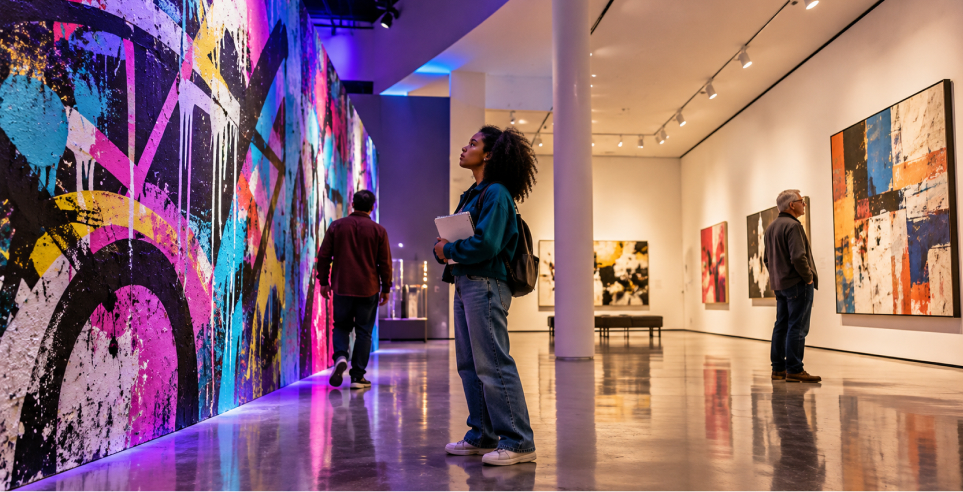
Street art has traditionally challenged the boundaries of the conventional art world. From painted subway cars and neighborhood walls to politically charged stencils and expressive graffiti lettering, the movement developed largely outside established museums and commercial galleries. Now, the Mobile Museum of Art in Alabama is bringing that creative history into a formal exhibition setting.
The arrival of internationally recognized artists such as Banksy and Jean-Michel Basquiat in Mobile reflects Alabama’s expanding cultural landscape, where major exhibitions, community festivals, and public events are attracting attention beyond the state’s borders. As Alabama’s entertainment industry develops, discussions about tourism, economic opportunities, and regulatory policy continue across different sectors. Readers following these broader developments can explore Alabama sports betting legal updates for information about the state’s evolving gambling legislation, a separate policy issue from the artistic programming and cultural investment represented by the GATEWAY exhibition.
The exhibition, GATEWAY: From Graffiti to Gallery, brings together internationally recognized artists associated with street art, graffiti, and contemporary visual culture, including Banksy, Jean-Michel Basquiat, Keith Haring, KAWS, and Kenny Scharf.
For Mobile, the exhibition represents an opportunity to introduce audiences to artistic movements that transformed public spaces into platforms for cultural expression. It also raises a larger question: What happens when art originally associated with streets, subways, and unconventional venues becomes part of a museum experience?
The exhibition’s public programming gained additional attention on October 24, 2026, when the museum hosted a free GATEWAY Family Day featuring activities intended to make contemporary art accessible to visitors of different ages.
The event highlights a growing emphasis on connecting museum exhibitions with community participation rather than treating internationally recognized artworks as objects reserved for specialists.
For Alabama’s cultural community, GATEWAY offers an opportunity to examine the relationship between urban art, artistic identity, public expression, and the changing role of regional museums.
What Is GATEWAY: From Graffiti to Gallery?
GATEWAY opened to the public on September 1, 2026, at the Mobile Museum of Art, located at 4850 Museum Drive in Mobile, Alabama. The exhibition is scheduled to remain on view through September 1, 2027, giving residents and visitors an entire year to explore its artistic themes.
The museum is the exclusive venue for the exhibition, which was developed in collaboration with the Masterworks Foundation and Level & Co. Gallery. Its collection includes 28 significant works by five influential artists whose careers demonstrate how graffiti and street art evolved into internationally recognized forms of contemporary expression.
Rather than presenting a complete chronological history of graffiti, GATEWAY examines five interconnected artistic approaches. The exhibition explores how artists adapted techniques associated with public spaces into paintings, installations, graphic imagery, and other works that could circulate within galleries and collections.
The official Alabama tourism listing for GATEWAY describes an exhibition connecting the immediacy of street-level artistic expression with the broader development of contemporary art.
That distinction is important. Graffiti and street art are not identical, and the artists represented in GATEWAY followed different creative paths. Some developed their visual languages through New York’s street culture, while others adapted public imagery, commercial graphics, and political commentary into distinctive contemporary practices.
By placing their works together, the museum encourages visitors to identify both the shared influences and the differences between them.
Five Artists Who Changed the Relationship Between Streets and Galleries
The exhibition’s strongest attraction is its combination of artists whose work helped redefine the boundaries between public art, fine art, and popular culture.
Artist
Artistic Approach
Significance to GATEWAY
Jean-Michel Basquiat
Expressive painting, text, symbols, and cultural references
Connects New York street culture with contemporary painting
Keith Haring
Bold outlines, energetic figures, and accessible visual symbols
Demonstrates how public art can communicate across audiences
Kenny Scharf
Pop surrealism, vivid colors, and imaginative characters
Connects street culture, popular imagery, and large-scale painting
KAWS
Repeated characters, graphic forms, and commercial imagery
Explores the relationship between art, branding, and mass culture
Banksy
Stenciled imagery, satire, and political commentary
Challenges conventions surrounding public space and artistic authority
Jean-Michel Basquiat and the Language of Urban Expression
Jean-Michel Basquiat emerged from New York’s downtown cultural scene during the late 1970s and early 1980s. His paintings combine expressive marks, written language, symbols, historical references, and images that invite multiple interpretations.
Basquiat’s association with the SAMO graffiti project helped establish his connection to the city’s street culture before his paintings gained international recognition.
His work is particularly relevant to GATEWAY because it demonstrates that the movement from public expression to museum exhibition was not simply a change in location. It also involved questions about artistic identity, race, cultural authority, and who determines which creative practices receive institutional recognition.
Keith Haring and Art Designed for Public Audiences
Keith Haring developed a visual language that could be understood quickly in public spaces. His energetic figures, thick outlines, and repeated symbols became recognizable through drawings in New York subway stations and later through paintings, murals, and other projects.
Haring’s work often addressed social issues, including public health, discrimination, and community responsibility.
His inclusion illustrates how visual simplicity can coexist with serious cultural commentary.
The exhibition features works that reflect the immediacy of Haring’s approach, including unconventional painted surfaces associated with his practice.
Kenny Scharf and the Influence of Pop Surrealism
Kenny Scharf brings a different atmosphere to the exhibition.
His work combines colorful characters, popular culture, science-fiction influences, and surreal visual environments. The resulting imagery can appear playful while also commenting on consumer culture and modern life.
GATEWAY includes an immersive presentation of Scharf’s Evolution Revolution series, demonstrating how scale and repetition can transform a gallery environment.
Scharf’s connection to Mobile is also notable. Local reporting has highlighted the personal and regional relationships that helped bring the exhibition to southwest Alabama.
KAWS and the Expansion of Street Art Into Global Visual Culture
KAWS, whose real name is Brian Donnelly, represents a later generation of artists who moved between street interventions, graphic design, painting, sculpture, and commercial collaborations.
His recurring characters and recognizable visual motifs demonstrate how artistic imagery can circulate across galleries, consumer products, and digital culture.
GATEWAY features presentations of KAWS’ CHUM paintings, emphasizing the importance of repetition, character design, and scale.
His work raises questions about the relationship between artistic accessibility and commercialization.
Banksy and the Power of Political Imagery
Banksy is internationally recognized for stencil-based works that use satire, irony, and recognizable imagery to address political and social issues.
His public artworks frequently depend on their original surroundings for meaning, making their presentation inside museums particularly interesting.
GATEWAY includes works associated with Banksy’s distinctive visual approach, including Girl with Balloon and a piece paying tribute to Basquiat.
As described in Mobile Bay Magazine’s exhibition coverage, the presentation brings together the different visual languages of these five artists within a single museum setting.
The result is an exhibition that asks visitors to consider how artistic meaning changes when work associated with public spaces enters an institutional environment.
GATEWAY Family Day Brings Street Art to Alabama Families
The October 24 GATEWAY Family Day demonstrated how the Mobile Museum of Art is using the exhibition to encourage direct participation in artistic activities.
Held from 11 a.m. to 3 p.m., the free event combined gallery access with creative workshops, live demonstrations, poetry, and community activities.
The program included mural demonstrations, collaborative graffiti-inspired artwork, printmaking activities influenced by Keith Haring, guided exhibition tours, and spoken-word performances by regional artists associated with PowerLines Poetry.
Food trucks and family-friendly activities also helped create an environment intended to welcome visitors who might not regularly attend museum exhibitions.
Museum executive director Jon Carfagno emphasized the importance of connecting the exhibition’s artistic themes with community programming, while curator of art education Kaitlyn Amanor highlighted opportunities for families to explore art together.
Although the event has passed, its significance extends beyond a single afternoon.
Street art is particularly well suited to participatory education because many of its visual techniques are immediately recognizable. Bold lettering, repeated symbols, stencils, and colorful characters provide accessible starting points for discussing more complicated ideas about artistic ownership and public expression.
Children can respond to the imagery before learning its historical context, while older visitors can examine questions about politics, cultural identity, and the relationship between artists and their communities.
The museum’s decision to combine a major exhibition with hands-on activities therefore supports a broader educational objective: encouraging visitors to see contemporary art as something they can engage with rather than simply observe.
Why Mobile Is an Important Location for This Exhibition
Mobile may not have the international art-market reputation of New York or Los Angeles, but the city has a substantial cultural history and an established community of artists, museums, and public arts organizations.
Its location along the Alabama Gulf Coast also places it within reach of visitors from Mississippi, the Florida Panhandle, and other parts of the Southeast.
Hosting GATEWAY exclusively in Mobile creates an opportunity for regional audiences to experience major works without traveling to larger metropolitan art centers.
The exhibition also demonstrates the value of partnerships between regional institutions and organizations that hold significant collections.
The Masterworks Foundation’s involvement helped make the presentation possible, while support from Level & Co. Gallery and exhibition sponsors contributed to its development.
Local reporting has identified connections between Masterworks leadership and the Mobile area as an important part of the exhibition’s origin.
This background illustrates how personal relationships, institutional collaboration, and regional cultural investment can influence where major exhibitions are presented.
However, it would be premature to claim that GATEWAY has already generated a measurable increase in tourism spending or museum attendance without published figures.
Its potential economic influence is nevertheless worth examining.
A year-long exhibition featuring internationally recognized artists may encourage repeat visits, educational trips, and travel from surrounding communities. Those visits can also create opportunities for nearby restaurants, accommodations, and other local businesses.
The broader cultural value is equally significant. Exhibitions of this scale can help regional museums strengthen their reputations, attract partnerships, and introduce audiences to artistic movements that are sometimes underrepresented in local programming.
How Museums Are Changing the Meaning of Street Art
One of GATEWAY’s central themes is the tension between street art’s public origins and its growing institutional recognition.
A mural or stencil created in a public setting can communicate directly with people who encounter it during everyday life. Its meaning may depend on the surrounding neighborhood, political environment, or physical surface.
When similar imagery enters a museum, the viewing experience changes.
The artwork becomes part of a curated presentation. Visitors encounter explanatory materials, institutional interpretation, and an environment designed for sustained observation.
That transition can preserve works and expand educational access, but it also raises questions about context.
Does a politically charged stencil carry the same meaning inside a gallery? Can a work rooted in unauthorized public expression retain its original character when displayed within an established institution?
There are no simple answers.
Basquiat, Haring, Scharf, KAWS, and Banksy each developed different relationships with public space, commercial culture, and institutional recognition.
GATEWAY’s value lies partly in allowing visitors to compare those approaches rather than treating all five artists as representatives of one uniform movement.
The exhibition also reflects a wider development in contemporary art: museums increasingly recognize that influential visual culture does not emerge exclusively from traditional academic or gallery settings.
Advertising, music, fashion, graffiti, and neighborhood artistic communities have all contributed to the development of contemporary artistic practices.
By examining these connections, museums can provide a more complete account of how visual culture changes over time.
Visiting the GATEWAY Exhibition at the Mobile Museum of Art
GATEWAY remains open through September 1, 2027, providing an extended opportunity for Alabama residents and out-of-state visitors to explore the exhibition.
GATEWAY Visitor Information
Through Sep 1, 2027
Venue
Mobile Museum of Art
Address
4850 Museum Drive, Mobile, AL 36608
Regular hours
Tuesday–Saturday, 10 a.m.–5 p.m.
Adult admission
$12
Senior admission
$10
Student admission
$8
Children under 6
Free
Mobile County residents
Free on Thursdays
Published visitor information; check the museum for current admission policies and schedule changes.
The museum is located in Municipal Park, also commonly known as Langan Park, making it accessible to visitors exploring Mobile’s wider cultural attractions.
Additional educational programming is scheduled throughout the exhibition’s run.
Monthly GATEWAY gallery talks offer visitors opportunities to explore the artists’ work and the exhibition’s historical themes in greater depth.
Upcoming talks are listed for November 5 and December 3, 2026, with additional dates extending into 2027. Published admission is $5 for museum members and $10 for nonmembers.
Visitors can consult the GATEWAY gallery talk schedule for upcoming sessions and registration information.
The year-long schedule also provides opportunities for schools, arts organizations, and community groups to incorporate the exhibition into educational activities.
What GATEWAY Could Mean for Alabama’s Cultural Future
GATEWAY arrives at a time when regional museums are increasingly expected to serve multiple roles.
They must preserve and interpret art while also providing educational experiences, encouraging community participation, and attracting audiences with different cultural interests.
The Mobile Museum of Art’s presentation addresses those responsibilities through a combination of internationally recognized artworks and locally accessible programming.
The exhibition’s exclusive Mobile location is particularly important because it challenges the assumption that major contemporary art presentations must be concentrated in America’s largest cities.
For younger artists, GATEWAY offers an opportunity to study creative careers that developed through unconventional paths.
For educators, it provides material for discussing visual communication, cultural history, and public expression.
For visitors, it offers a chance to compare artists whose imagery has influenced painting, fashion, advertising, and popular culture.
The most meaningful measure of the exhibition’s success will not necessarily be the number of famous names displayed on its walls. Its longer-term influence may depend on whether it encourages repeat museum visits, new artistic participation, and stronger connections between Mobile’s cultural institutions and surrounding communities.
With GATEWAY scheduled to remain open until September 2027, the museum has time to develop those relationships through tours, educational programs, and public events.
The exhibition ultimately demonstrates that Alabama’s museums can participate in important international artistic conversations while maintaining a distinctly regional commitment to public access and community engagement.
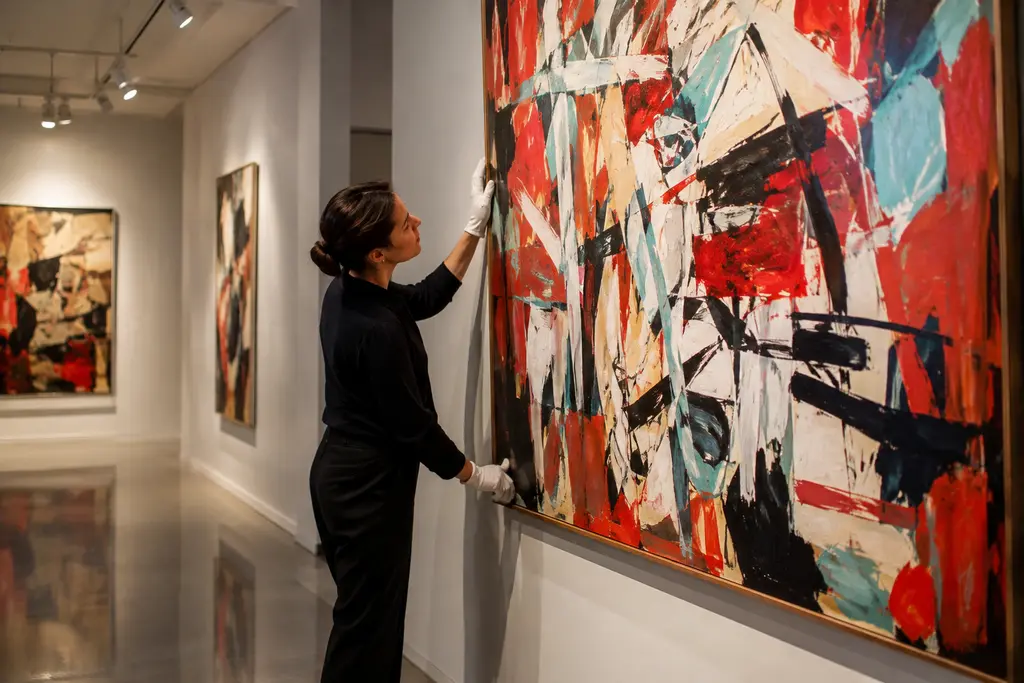
The Krasner Pollock Met exhibition opened to the public on October 4, 2026, and is scheduled to remain on view through January 31, 2027, in Gallery 899, the Tisch Galleries, at The Met Fifth Avenue, according to The Met exhibition page. Its title, Past Continuous, comes from Lee Krasner’s 1976 mixed-media painting, which incorporated collaged fragments of earlier drawings. That title is not decorative; it gives the show a framework for thinking about recurrence, revision, memory, and artistic contact.
The exhibition’s significance rests partly on scale and partly on structure. It gathers more than 120 works, including paintings, works on paper, and ephemera, with rarely seen material and loans from private collections. It also marks the first major New York exhibition at The Met in more than 20 years dedicated to either Krasner or Jackson Pollock. Rather than treating one artist as the context for the other, the show presents their careers in parallel: before they met, through their marriage from 1945 onward, and after Pollock’s death in 1956.
What The Krasner Pollock Met Frames
Why The Krasner Pollock Met Chronology Matters
The chronological structure is one of the show’s central interpretive tools. It asks viewers to consider timing before reputation. Krasner and Pollock are not shown only as a famous artistic couple, nor is the material reduced to biography. The layout places early formation, mutual exchange, and later development into a sequence that makes comparison possible without forcing sameness.
That matters because the artists’ public reputations have not always been balanced. Pollock’s name has often carried wider recognition, while Krasner’s career has required repeated reassessment in museum and scholarly settings. The curatorial frame described in the research notes, led by David Breslin and Brinda Kumar, emphasizes both Krasner’s standing as an artist and her role in supporting Pollock’s legacy after his death. The stronger reading of the show is not that influence moved in one direction, but that proximity, argument, ambition, and memory shaped two distinct bodies of work.
A Parallel Method, Not A Marriage Plot
A parallel display can be risky if it turns artistic practice into domestic anecdote. Here, the more useful question is how each artist worked through scale, gesture, fragmentation, and return. Pollock’s Autumn Rhythm: Number 30 from 1950 is among the featured works. The painting measures 8 feet 10 inches by 17 feet 4 inches and entered The Met’s collection in 1957 through the George A. Hearn Fund. Its presence gives the exhibition a major institutional anchor, but it does not end the argument.
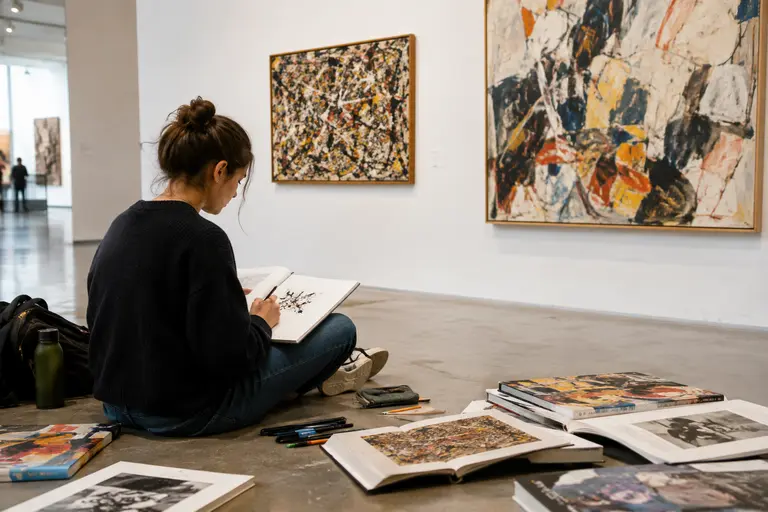
Krasner’s later production receives focused attention, including large-scale abstract canvases and collage-based work such as Rising Green from 1972. That placement is important because Krasner’s post-1956 work cannot be treated as an epilogue to Pollock. It belongs to a continuing practice. The subtitle Past Continuous is especially apt here: earlier marks, drawings, and decisions return as active material rather than as archive alone.
Collection Imbalance And Exhibition Balance
What The Numbers Suggest
As of October 8, 2026, The Met held 125 works by Pollock and 9 by Krasner. In this exhibition, 10 Pollocks and 4 Krasners from the museum’s holdings are on view in Gallery 899. Those numbers do not explain the full exhibition, since the show includes loans from many sources, but they do signal a familiar institutional imbalance. Museums can shape public memory not only through the art they display, but through what they have collected over time.
The exhibition’s loans help offset that imbalance. The show includes works from more than 80 institutions globally and places Krasner and Pollock in relation to art historical precedents and contemporaries, including Matisse, de Kooning, and Picasso, as reported by The Guardian. That wider field is useful because it resists the idea that either artist developed in isolation. The display situates their innovations within broader mid-20th-century modernism, where exchange, rivalry, absorption, and rejection all mattered.
The exhibition opened on October 4, 2026, and is scheduled through January 31, 2027.
It is installed in Gallery 899, the Tisch Galleries, at The Met Fifth Avenue.
It includes more than 120 works across paintings, works on paper, and ephemera.
The structure follows both artists before they met, during their marriage, and after Pollock’s death in 1956.
Why Institutional Context Changes The Reading
The Met’s modern and contemporary galleries, galleries 900–925, are closed while being rebuilt as part of the Oscar L. Tang and Agnes Hsu-Tang Wing. That wing is scheduled to open in 2030 and is planned to offer around 69,500 square feet of exhibition space. The location of this show in Gallery 899 therefore carries extra weight. During a period of rebuilding, a concentrated exhibition can become a temporary argument about how modern art should be displayed and interpreted.
A related NextClues essay on the Krasner Pollock dialogue also weighs the problem of influence and the visibility of Krasner’s post-1956 production. The shared concern is not whether one artist should replace the other in public attention. The sharper issue is whether a museum can show contact without hierarchy.
Influence, Recurrence, And Modern Art
How The Exhibition Recasts Influence
The Krasner Pollock Met also raises a broader question for modern art criticism: how should influence be described when two artists lived closely, worked intensely, and changed across time? Influence is often narrated as a line from one artist to another. This exhibition suggests a less simple pattern. Shared conditions may lead to different solutions. A painter may absorb pressure from a peer without imitating that peer. A later work may reactivate earlier material without repeating it.
Krasner’s collage practice is central to that issue. The 1976 painting that gives the exhibition its subtitle used collaged earlier drawings, making the past physically present in a new work. That is not only a personal strategy; it is also a model for reading the exhibition. The show asks viewers to see prior work as something artists revise, cut, preserve, and challenge.
Pollock’s inclusion, especially through a major painting such as Autumn Rhythm: Number 30, allows the exhibition to acknowledge his institutional stature. Krasner’s inclusion, especially through later canvases and collage-based works, tests whether institutional attention can catch up to a longer career arc. The result is not a simple correction. It is a more demanding comparison, one that depends on sustained looking.
Where Visual Culture Enters The Conversation
Although the exhibition centers on painting, drawing, and ephemera, its questions reach beyond the museum wall. Modern art continues to affect how artists, educators, designers, and makers think about gesture, surface, scale, and memory. Readers interested in the overlap between art history, dress, and fantasy-inflected visual culture may also find related coverage at Fairy Tale Fashion, particularly where exhibition thinking meets costume and image-making.
Care is needed here. It would be misleading to claim that the exhibition has already changed contemporary practice in a measurable way as of October 26, 2026. What can be said is narrower and better supported: the show gives viewers a major institutional case study in how two modern artists can be presented as separate, linked, and historically situated at the same time.
Krasner Pollock Met And Modern Art
The Krasner Pollock Met is most persuasive as a study in relation rather than ranking. Its parallel chronology, its attention to Krasner’s later work, and its placement of both artists among wider mid-20th-century references make it a significant exhibition for readers interested in modern art’s public narratives. It does not erase biography, but it refuses to let biography do all the interpretive work.
For emerging artists and students, the show offers a useful lesson: artistic identity is often built through return, revision, and contact with others. For critics and museum audiences, it offers a different task: to look at influence without flattening difference. On the evidence available, Krasner and Pollock: Past Continuous is not only about two major artists. It is about how museums decide which continuities become visible.
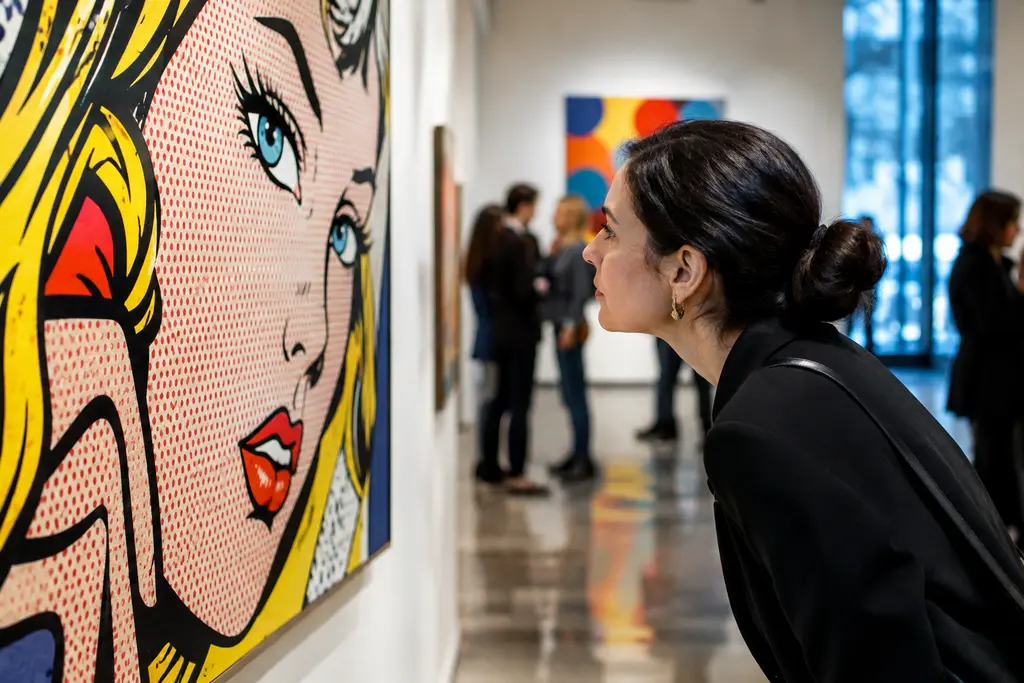
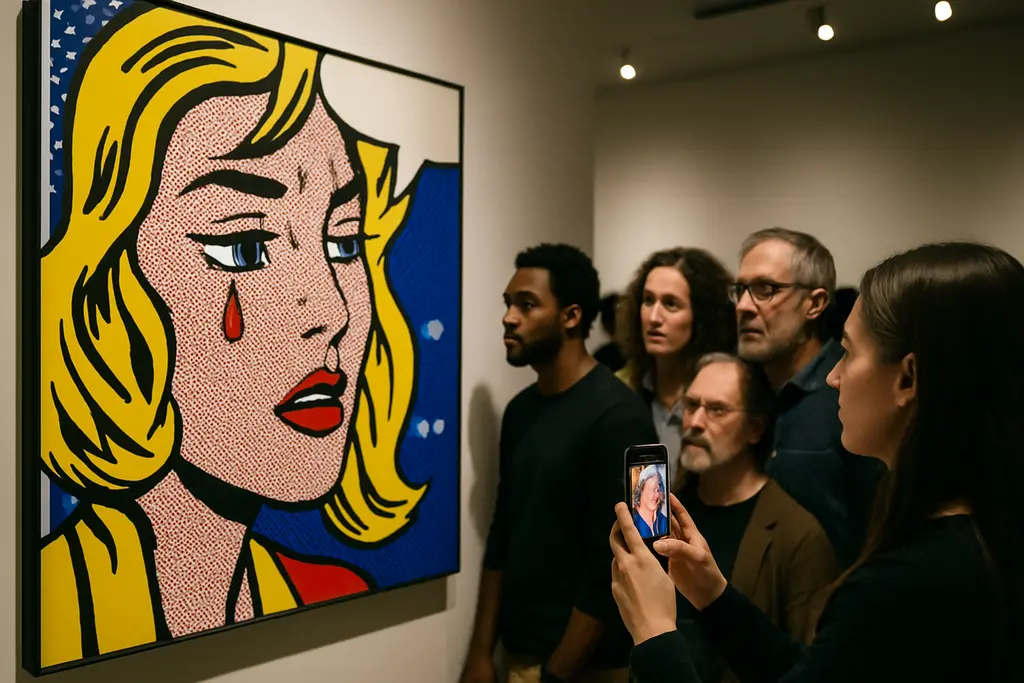
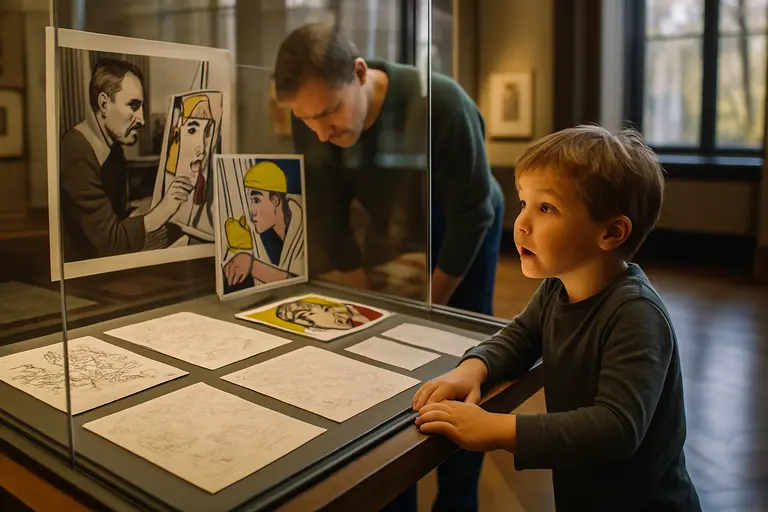
Lichtenstein Like New is on view at the Whitney Museum of American Art in New York from October 11, 2026 through May 10, 2027, and its timing gives the show a charged cultural position rather than a purely celebratory one. The exhibition is presented as the first major New York retrospective of Roy Lichtenstein’s work since 1993, with approximately 130 works across six decades, according to the Whitney exhibition page. That scale matters because Lichtenstein is often reduced to a handful of instantly recognizable Pop images. The Whitney’s presentation asks visitors to consider a longer practice: paintings, drawings, sculpture, collage, prints, and film, from the early 1940s through the 1990s.
As someone who cares about how museum shows land in community life, I read this exhibition as more than a display of familiar works. It is a public test of how audiences talk about copying, quotation, perception, and the social life of images. Those issues can be exhilarating in a gallery and sensitive in studio, classroom, and creator-commerce settings. The most useful response is not to flatten the debate into praise or dismissal, but to look closely at what the exhibition places in front of us and what questions it leaves active.
Why Lichtenstein Like New Matters Now
Lichtenstein Like New And Image Circulation
The force of the exhibition lies in how it frames Lichtenstein’s work as a sustained study of image circulation. Research materials for the show stress his interest in perception, appropriation, and the way images shift meaning over time. That approach feels especially pointed in a culture where pictures move quickly across screens, archives, storefronts, and automated image systems. The museum context slows that movement down. It asks visitors to treat an image not only as a surface, but as something with source, scale, material, audience, and afterlife.
The works named in the exhibition materials include Look Mickey (1961), Girl with Ball (1961), Masterpiece (1962), Drowning Girl (1963), and Little Big Painting (1965). These are not minor selections. They sit close to the public memory of Lichtenstein’s art, especially his use of commercial image language, hard outlines, stylized emotion, and the dot structures that became central to his public identity. Yet the exhibition’s six-decade span resists the idea that one visual device can explain the whole practice.
For community organizers, educators, and artists, Lichtenstein Like New offers a useful case study in how a familiar style can become a shared reference point while still carrying unresolved questions. The exhibition does not need to settle every debate in order to be useful. Its value comes from bringing many periods and media together so that visitors can compare early choices with later revisions, expansions, and returns.
What The Whitney Installation Changes
Scale, Murals, And Reconstructed Rooms
The Whitney installation is significant because it changes the viewer’s sense of Lichtenstein’s scale. A report from Wallpaper notes that the museum’s fifth-floor gallery, about 1,700 square meters, has been arranged through thematic groupings, with the “Mirror” works receiving their own room. That physical staging matters. Lichtenstein can be remembered through small reproductions, but the exhibition asks viewers to measure the work through space, repetition, and bodily movement.
One of the most striking installation decisions is the recreation or reinterpretation of large-scale murals, including the nearly 96-foot-long Greene Street Mural, originally made in 1983. That gesture shifts attention from the single framed canvas to an immersive spatial work. It also encourages a slower reading of how Lichtenstein used graphic clarity at architectural scale. In reproduction, his works can feel almost frictionless. In a gallery, the size and placement can make the act of looking feel more physical.
The reconstruction of his 1962 debut of Pop-style work at Leo Castelli Gallery is another key curatorial move. According to the research materials, the exhibition brings together all works from that first Castelli show for the first time. This kind of reconstruction can help audiences understand how a body of work first appeared as a group, not just how later art history isolated its most famous examples. It is a reminder that exhibitions themselves shape artistic reputation.
The exhibition runs from October 11, 2026 through May 10, 2027.
It includes approximately 130 works across six decades.
Media include painting, drawing, sculpture, collage, prints, and film.
Curatorial leadership includes Whitney curator Meg Onli and guest curator Alex Da Corte.
Appropriation, Perception, And Respectful Reading
Reading Sources Without Flattening Artists
Any serious discussion of Lichtenstein has to address appropriation with care. The exhibition’s own framing, as described in the research, places image circulation and shifting meaning near the center of the conversation. That does not erase concern about source images, comic artists, commercial illustration, or the unequal attention that museum culture can assign to different makers. It does mean the show gives viewers a structured place to ask those questions with evidence in front of them.
This is where art criticism and community practice meet. In classrooms, local arts programs, and maker circles, Lichtenstein’s work can prompt productive discussion about influence, credit, quotation, and context. For creators, the practical lesson is caution: visual inspiration and rights clearance are separate matters. A museum exhibition can illuminate historical practice, but it does not grant permission to copy protected images, characters, or living artists’ work for commercial use. That distinction protects artists as well as audiences.
Readers following the originality debate may also find a related NextClues discussion of questions of originality useful, since the Whitney show has renewed interest in how art institutions frame copying and transformation. For those tracking art-adjacent maker culture, Shimply serves as a relevant reference, although it’s important to approach rights questions with care.
The curatorial pairing of Meg Onli and Alex Da Corte is also notable because it brings contemporary perspective to Lichtenstein’s reception. The research materials identify Onli as a Whitney curator and Da Corte as guest curator. That pairing suggests a show interested not only in historical placement, but also in how younger and present-day audiences encounter the work. Still, a cautious reading is needed. Curatorial intent can open pathways, but visitors bring their own knowledge of comics, advertising, museum authority, and image reuse.
Community Meaning Of Lichtenstein Like New
The community impact of a retrospective depends on what happens after the first wave of attention. Lichtenstein Like New can support public conversations about Pop art, media literacy, and the ethics of looking. It can also remind local arts groups that accessibility and seriousness do not have to be opposed. Lichtenstein’s imagery is often immediately legible, yet the debates around it are layered enough for sustained discussion.
For New York audiences, the exhibition’s return to Lichtenstein after more than three decades without a major local retrospective carries institutional weight. For visitors from elsewhere, it offers a concentrated view of an artist whose public image can be both familiar and incomplete. The inclusion of works such as Rouen Cathedral, Set III (1968–69) and Artist’s Studio “The Dance” (1974), along with the better-known early 1960s paintings, helps broaden the conversation beyond a single Pop formula.
The lasting value of Lichtenstein Like New may be its insistence that famous images still need fresh scrutiny. Not because every viewer must leave with the same judgment, but because shared cultural memory deserves careful testing. A good exhibition can gather people around admiration, discomfort, curiosity, and disagreement without asking them to pretend those responses are identical. That is where art becomes part of civic life: not as decoration, but as a public setting for better questions.
Live Nation’s July 30, 2026 report made concert demand a measurable business story rather than a vague cultural impression. The company reported second-quarter revenue of US$7.7 billion, up 9% from Q2 2025, in its Live Nation report. For artists, promoters, venue operators, and sellers clustered around live music culture, the figures point to a market in which audiences continued to spend on shared events through the first half of 2026. The harder question is what these numbers can and cannot tell us about access, pricing pressure, and the wider creative economy.
What concert demand Shows In Mid-2026
The headline figures from Live Nation’s Q2 report were broad. Through mid-July 2026, the company said it had sold more than 143 million tickets, ahead of the prior year’s pace by more than 14 million tickets. During Q2 2026, nearly 49 million fans attended Live Nation shows worldwide, with the company attributing the roughly 10% attendance growth mainly to international markets.
Those figures matter because they cover more than one measure of strength. Revenue can rise because of price changes, mix, sponsorship, or premium products. Attendance speaks more directly to crowd volume. Ticket sales give another view into forward activity. Taken together, the data suggests that the live-event business did not depend on a single metric to show momentum during the period covered by the report.
Reading The Scale Of Attendance
Nearly 49 million attendees in one quarter is significant by any cultural-industry measure, but it should not be read as a uniform condition for every performer or venue. Live Nation’s data reflects its own operations, including major venue types and global touring. Smaller rooms, independent promoters, local festivals, and experimental music spaces may face different economics. The report offers a clear view into a large public company, not a full census of live culture.
Why Company Data Needs Context
Company-reported figures are useful, especially when tied to filings and quarterly disclosures, but they are also framed around investor communication. A cautious reading separates the evidence from broader claims. The data supports the idea that Live Nation experienced strong demand in Q2 2026. It does not, by itself, prove that every segment of live music became healthier, or that audiences felt less pressure from ticket and onsite costs.
Concert Demand And The Artist Economy
For working artists, the most relevant question is not simply whether more people attended shows. It is whether audience interest can support sustainable touring, fair production conditions, and meaningful opportunities beyond the top tier of acts. Live Nation’s report noted growth across large venue types, including stadiums, arenas, and amphitheaters. That breadth matters because it suggests activity across different scales of commercial touring, even though the available figures do not break down artist earnings.
concert demand Beyond Headliners
Strong concert demand can influence the broader cultural field around a show. Costume designers, poster artists, photographers, stage crews, projection designers, makeup artists, local vendors, and independent merch sellers often sit near live music without appearing in headline financial results. Their position can improve when audience traffic rises, but the link is indirect. A sold-out venue does not automatically mean equitable pay for every creative worker connected to the night.
For visual artists and makers, live events can act as points of contact with audiences who already identify with a scene. Rave fashion, handmade accessories, fan-made objects, and limited-run prints often circulate around music gatherings. Rights clearance remains a serious issue for sellers using names, likenesses, logos, or protected imagery. The safer creative path is original design language rather than unlicensed use of an artist’s identity or a venue’s brand assets.
What Ticket Volume Cannot Prove
Ticket volume can show appetite for attendance, but it cannot explain who was priced out, which genres gained most, or how revenue was divided among artists, venues, promoters, ticketing platforms, and service providers. It also does not show whether fans substituted concerts for other cultural spending, such as gallery visits, independent theater, small festivals, or local club nights. The data is strong, but its interpretive boundary is clear.
That boundary is useful for arts reporting. It keeps the story grounded. Rather than declaring a universal boom, the evidence supports a narrower claim: in the company’s Q2 and mid-2026 indicators, Live Nation saw higher revenue, higher attendance, higher ticket sales, and stronger booking-related balances than the comparable periods cited in its report.
Sponsorship, Ticketing, And Venue Signals
The ticketing side also showed gains. Live Nation said Ticketmaster sold 90 million fee-bearing tickets during Q2 2026, up 8% year over year, and that Ticketmaster adjusted operating income rose 14%. These numbers indicate that demand was visible not only at the concert segment level, but also in the transaction systems attached to ticketed events.
A separate Reuters account reported that Live Nation beat quarterly revenue estimates and cited Concerts segment revenue of US$6.44 billion for Q2 2026, up about 8.3% year over year, according to the Reuters report. That segment figure gives a useful check against the broader consolidated revenue number, since concerts remain the cultural activity at the center of the company’s public identity.
Advance Commitments And Deferred Revenue
Live Nation also reported deferred revenue related to events not yet held as of June 30, 2026, at US$6.4 billion. The company described that as a 25% increase, or about US$1.3 billion, from June 30, 2025. Deferred revenue is not the same as completed event income, but it can show that ticketing and booking activity had already moved money onto the balance sheet for later performances.
Sponsorship and advertising data pointed in the same direction. In Q2 2026, the company said Sponsorship & Advertising adjusted operating income rose 13%, driven by international expansion of venues and festivals. It also said more than 95% of sponsorship commitments for 2026 had already been booked. That is a notable signal for brand spending around live events, though it should not be treated as a direct measure of fan welfare or artist compensation.
Ticketmaster Data As A Market Signal
Ticketmaster’s fee-bearing ticket volume is especially important because it captures transactions rather than only reported attendance. A ticket sale can precede the event by weeks or months, so this kind of data helps explain why Live Nation’s leadership could point to strength beyond a completed quarter. Still, ticketing data also sits inside a contested public debate about fees, market power, and affordability. Those issues are not resolved by higher volume.
For arts communities, the more productive reading is neither celebratory nor dismissive. The scale of the numbers shows that large-format live events retained audience pull through mid-2026. The absence of deeper breakdowns leaves open questions about geographic distribution, genre differences, and the share of value reaching the creative workers who make performances legible, memorable, and visually distinct. Readers tracking adjacent music and creator-culture coverage can find related context at Robsonic, a related site in the same network.
Live Nation Reports On Strong Demand For Concerts
The story is best read as a shift in live-event economics, not a simple claim that everything in live music improved. Live Nation’s Q2 2026 data showed higher consolidated revenue, large attendance, faster ticket sales than the prior year’s pace, and stronger deferred revenue tied to events scheduled after June 30, 2026. Those are strong indicators for a major live-entertainment company.
At the same time, concert demand is less a single headline than a set of pressures moving through venues, ticketing systems, sponsorship plans, artist teams, and audience budgets. The company’s results support confidence in large-scale live events through mid-2026. They do not answer every question about access, independent scenes, or how value is shared. That is where future reporting should stay specific: dates, segments, attendance, revenue, and the people whose creative labor makes the crowd worth gathering.
Protest Music Influence from the Power to the People Festival is best understood with some caution: one concert does not prove a new movement by itself. Still, the October 3, 2026 event gave a clear public example of how contemporary artists can use a festival stage to connect songs, memory, and civic action without separating art from community life.
The inaugural Power to the People Festival, curated by Tom Morello, was held on Saturday, October 3, 2026, at Merriweather Post Pavilion in Columbia, Maryland. The festival was described by its organizers as a one-day celebration of “peace, justice, solidarity, music and community action,” and the official announcement placed artists associated with several generations of political music in the same program, including Bruce Springsteen, Joan Baez, Public Enemy, Serj Tankian, The Linda Lindas, and The Neighborhood Kids festival announcement.
How Protest Music Influence Was Staged
The festival’s clearest cultural signal came from its structure. It did not treat protest music as a museum piece, nor did it frame younger artists as detached from earlier traditions. Instead, the event placed legacy performers and newer voices inside one shared program. That choice mattered because protest music often travels through reuse: songs are covered, lyrics are recontextualized, and performance settings change the meaning of familiar material.
Protest Music Influence Across Generations
Protest Music Influence at the festival showed up through proximity. The same bill could hold artists with long public associations with dissent and younger bands whose political language comes through punk, rock, and direct social critique. Based on the reported lineup, The Linda Lindas and The Neighborhood Kids appeared beside performers whose work has been tied for decades to anti-war, labor, civil-rights, or anti-authoritarian themes. That pairing did not prove a single lineage, but it made lineage visible.
For contemporary artists, that kind of bill can work as a public permission structure. It suggests that protest songs need not sound like one era, genre, or instrumentation. A punk song about racism and sexism, a hip-hop performance with direct political speech, and a folk-rock cover can all operate within the same civic frame. The lesson is less about copying a style and more about understanding how artists use form, audience, and timing to give songs public force.
Covers As Shared Civic Memory
Reported set choices also made historical memory part of the event’s method. The Washington Post reported performances and covers connected to Woody Guthrie, John Lennon, Creedence Clearwater Revival, and Bob Dylan, including “This Land Is Your Land,” “Power to the People,” “Deportees,” “Fortunate Son,” and “Chimes of Freedom.” The same report described political statements from the stage, Freedom Village spaces for civic engagement, and voter-registration appeals about one month before the 2026 U.S. midterm elections Washington Post report.
Covers can be artistically risky because they invite comparison with well-known recordings. At this festival, the reported function was not novelty alone. Familiar songs carried earlier struggles into a 2026 civic setting. That is one way protest music can remain active: not by freezing an older song in its original moment, but by asking whether its questions still fit a new public crisis or audience.
What Contemporary Artists Could Take From It
The event offered several observable strategies for artists working with political material. These strategies should not be treated as rules, since political art depends on context, audience trust, and the artist’s own relationship to the subject. Yet the festival did show how performance choices can carry meaning beyond a setlist.
Direct Speech Without Replacing The Song
One reported feature of the festival was the mixing of songs with direct political language. Grandson was reported to have sung the refrain “My president’s a felon,” while Killer Mike urged concertgoers to “vote locally in thirty days” and to hold elected officials accountable. Those statements show a performance model in which artists did not leave political meaning to inference alone.
For contemporary musicians, the artistic question is balance. Direct speech can sharpen a performance when it grows from the song’s concerns and the artist’s public commitments. It can also flatten the art if the music becomes merely a container for slogans. The strongest festival evidence points toward a combined method: songcraft, stage speech, and community infrastructure working together, each doing a different kind of cultural work.
Collaboration As A Public Method
The festival also used collaboration as a visible form of continuity. Reports described Dave Matthews joining Morello, Baez, and Nathaniel Rateliff for folk and rock classics, while Jack Black, performing as “Jack Sabbath,” took part in Black Sabbath covers with kids. These pairings matter because protest music often depends on transmission. A song moves from one singer to another, from one generation to another, and from one political setting to another.
That transmission has community value. Festivals can make artistic inheritance legible in real time: a younger listener hears an older song in a new arrangement; an older listener sees a newer artist carrying political urgency through a different sound. For readers interested in related coverage of cultural events and public life, our network also includes community arts writing at this related site.
Limits Of The Evidence
Any claim about influence needs boundaries. The available research supports the idea that the Power to the People Festival gave protest music a major public platform on October 3, 2026. It also supports that artists used covers, direct statements, cross-generational collaborations, and civic-action spaces. It does not, from the information provided here, prove measurable changes in streaming numbers, chart performance, songwriting trends, or audience behavior after the event.
Visibility Is Not The Same As Measured Impact
Media coverage and a sold-out event can point to visibility, but visibility is not the same as demonstrated influence. To measure post-festival effects, researchers would need reliable data from streaming services, ticketing records, surveys, chart movement, publishing activity, or interviews with artists about work made after October 3, 2026. Without those materials, the safer claim is that the festival modeled a public-facing approach to protest music rather than proving a broad industry shift.
That caution does not weaken the cultural reading. In arts criticism, influence can be discussed at several levels. There is direct influence, where an artist names a work or event as a source. There is institutional influence, where festivals, venues, and curators create platforms that make certain approaches more visible. There is also community influence, where audiences encounter artistic traditions together and carry those references into local conversations. The evidence here is strongest for the second and third categories.
NextClues has also examined how performance, nonprofits, and voting appeals shaped civic meaning in political messages in music at the same festival. Read alongside the present analysis, that angle reinforces a careful point: the event’s artistic influence cannot be separated from its civic design.
Power To The People Festival And Protest Music Influence
The strongest reading of the Power to the People Festival is that it treated protest music as a living practice. On October 3, 2026, artists did not only revisit famous songs; they placed those songs beside new voices, spoken appeals, community organizations, and collaborations across age and genre. That combination gave contemporary artists a visible example of how protest performance can work on more than one level.
A Community Reading Of The Night
From a community arts perspective, the festival’s value lies in its mix of sound and civic gathering. Freedom Village, voter-registration appeals, and nonprofit spaces meant the event was not only a concert program. It was also a site where music and public participation were placed side by side. That design matters for artists who want their work to meet people where they gather, not only where they stream or buy recordings.
Protest Music Influence after the festival should therefore be described with both respect and restraint. The event offered a vivid public case study in how contemporary artists can borrow from older protest traditions, adapt them to present concerns, and share the stage with community action. What remains uncertain is how far that influence will travel in recorded music, touring practices, or local organizing beyond the festival date. The supported takeaway is still meaningful: on October 3, 2026, protest music was presented not as nostalgia alone, but as an active artistic and civic method.
Roy Lichtenstein’s work is being read again through two public measures that do not always move together: institutional attention and auction demand. On October 22, 2026, the strongest verifiable signals in the research point to a notable market rise in 2025, a major Christie’s result in May 2026, and a New York museum retrospective that opened on October 11, 2026, and is scheduled through May 10, 2027. Those facts do not prove a single cultural verdict, but they do show renewed pressure around how his images are valued, displayed, and debated.
For a cultural observer, Lichtenstein’s current resonance sits in a productive tension. His art is widely associated with the look of mass reproduction and comic-derived imagery, while the present market treats many of his works as scarce, high-value objects. That contrast is part of why his pictures still provoke discussion. They appear direct, sometimes coolly ironic, yet the systems around them—museums, auctions, estates, collectors, critics, and viewers—make their public life anything but simple.
Reading Roy Lichtenstein Work After Pop
Roy Lichtenstein Work And The Comic Image
The easiest reading of Lichtenstein can also be the least useful: a quick recognition of graphic style, speech-bubble drama, and printed-image effects. A slower reading asks why those borrowed-looking visual codes still carry force in a culture saturated with screens, screenshots, remixes, advertisements, and collectible images. Roy Lichtenstein’s work often turns attention toward mediation itself: not only what a picture shows, but how a picture arrives already shaped by other systems of image-making.
That question matters for communities of artists, illustrators, costumers, and makers who work near popular imagery. Many creators draw energy from shared visual languages while also facing practical questions about permission, attribution, and audience expectation. This is not a legal judgment about any particular artwork. It is a cultural point: images can circulate socially long before they are settled critically, and artists working with recognizable visual codes may be praised, challenged, or both.
For those curious about how storylines, attire, and fantasy intertwine with creative practices beyond traditional painting, Fairytale Fashion serves as an intriguing portal into how these elements are woven into image culture through clothing and narrative. This connection is particularly relevant because Lichtenstein’s reception transcends painting specialists, influencing broader dialogues on media surfaces, performance, and the fluid movement of familiar imagery.
Why Recognition Is Not The Same As Resolution
Lichtenstein’s pictures can feel instantly readable, yet recognition does not resolve the critical issues they raise. A viewer may identify the Pop-associated look quickly and still disagree about tone: admiration, parody, detachment, critique, or formal experiment can sit close together. This is one reason recent attention around his work deserves careful language. A high auction price can tell us that buyers competed for a work; it does not, by itself, settle the meaning of the work or the ethical questions some viewers bring to it.
A related NextClues discussion, Lichtenstein exhibition questions, treats originality as a live interpretive issue rather than a solved slogan. That framing is useful here. The modern resonance of Lichtenstein is not only nostalgia for Pop Art. It also comes from a present-day culture that repeatedly asks how images are copied, quoted, enlarged, reframed, monetized, and institutionalized.
Auction Evidence And Market Caution
What The 2025 Figures Show
The clearest numerical evidence comes from the 2026 Art Basel and UBS report. It states that in 2025 Lichtenstein became the top artist by aggregate auction sales value in the Postwar and Contemporary sector, with sales more than doubling year over year to just over US$171 million, moving him from tenth place in 2024 to first in 2025. The same report notes that at least 50 Lichtenstein works sold for more than US$1 million each in 2025, with The Kiss from 1962 selling for US$5.5 million at Christie’s New York, according to Art Basel and UBS.
Those figures support a narrow claim: the auction market for Roy Lichtenstein’s work strengthened sharply in 2025. They should not be stretched into claims about universal public enthusiasm or a single market direction for every category of his output. Auction totals can be affected by what comes to sale, the quality and rarity of specific works, seller timing, collector confidence, and the presence of major consignments. A strong year can signal demand, but it can also reflect supply conditions that may not repeat.
The research also points to volume as part of the story. Lichtenstein had 745 lots offered at auction in 2025, described in the notes as an all-time high and above a typical historical range of 500 to 600. That matters because aggregate totals are not only about record-setting canvases. Works on paper, editions, and less expensive media can make an artist’s market visible to a wider group of buyers while still operating within a highly stratified price structure.
The May 2026 Christie’s Signal
The May 2026 New York auction cycle added another major data point. Christie’s reported that Lichtenstein’s Anxious Girl from 1964 sold for US$46,060,000 in May 2026, as part of its 20th and 21st-century New York results covered by Christie’s results. That price sits far above the median levels described in the research notes for the broader Lichtenstein market, reminding readers that headline works and the wider pool of offered works are different categories of evidence.
This difference is worth stressing because cultural coverage can too easily compress an artist into one spectacular number. The same research notes indicate that most Lichtenstein works fall in lower-to-mid-market bands, with many auctioned works selling far below headline canvas prices. That does not make them culturally minor, nor does it make the top results irrelevant. It means the market is layered. A museum-scale painting, a print, a study, and a work on paper may all carry the same artist name while participating in distinct value systems.
Museums, Makers, And Public Memory
The 2026 Exhibition Context
The Whitney Museum of American Art exhibition named in the research, Roy Lichtenstein: Like New, opened on October 11, 2026, and is scheduled to run through May 10, 2027, in New York. Because October 22, 2026, falls after its opening date, it is best described as an active exhibition period rather than as a future event. Its timing gives critics and visitors a chance to compare the market’s recent signals with institutional framing.
Exhibitions can shape public memory differently from auctions. A sale usually isolates a work as a lot, with price, provenance, estimate, and buyer competition in view. A retrospective places works into relation: early and later phases, repeated motifs, experiments, absences, and unresolved debates. That format can slow the eye. It can also give space to voices that are not present in auction coverage, including educators, students, working artists, and viewers who meet the art outside the logic of acquisition.
Creator Culture And Rights Awareness
Lichtenstein remains especially relevant to creator communities because his work sits near questions many makers face: how to respond to popular imagery, how to signal influence without imitation, and how to build a visual identity in a culture that rewards recognizability. For independent sellers, illustrators, costume designers, and digital creators, those questions are practical as well as aesthetic. The safest cultural advice is not to copy a living artist’s style for deception, not to imply licensing without permission, and not to treat celebrity likenesses or copyrighted characters as free raw material.
That caution should not be mistaken for fear of influence. Artists have always learned through looking, studying, and responding. The issue is how openly and responsibly those responses are framed. Lichtenstein’s renewed visibility can encourage better conversations about sources, credit, adaptation, and the difference between influence, quotation, parody, homage, and commercial confusion. Those categories may overlap in public debate, so precise language helps protect both artists and audiences.
Aesthetic Reflections On Roy Lichtenstein Work
Roy Lichtenstein’s work remains resonant because it occupies an unsettled place between image pleasure and image doubt. The 2025 auction data and the May 2026 Christie’s result show strong market attention, while the 2026–2027 museum setting invites slower viewing and renewed argument. Neither sphere should be treated as the whole story.
For readers approaching Lichtenstein through culture rather than collecting, the useful lesson is one of scale. A familiar graphic language can carry different meanings in a museum, an auction room, a classroom, a studio, or a maker market. The work’s modern resonance lies in that movement: from mass-looking image to rare object, from cool surface to contested reference, and from art-historical category to living public conversation.
Aftershock Festival Impact is now easier to measure than it was before October 1-4, 2026. The Sacramento rock and metal festival drew a reported record 180,000 attendees across four days, beating the prior high of 165,000 in 2025, and sold out for the first time, according to Pollstar. Those numbers do not explain the full cultural value of the gathering, but they give Sacramento a clearer benchmark for how large-format live music now fits into the city’s public life.
As an arts and community observer, I read the 2026 result as more than a scoreboard item. Attendance records can be useful, yet they can also flatten the human work behind a festival: stage labor, hospitality staff, local vendors, production crews, transit planning, artist development, and the social rituals that make a temporary crowd feel organized rather than accidental. The stronger question is not only how many people came, but what that scale asked of Sacramento and what it gave back.
Measuring The Aftershock Festival Impact
Aftershock Festival Impact By Attendance
The festival’s 180,000-attendee total marked a clear rise from the 2025 figure cited in the research notes. Pollstar also reported more than 140 artists across five stages, including the newer Point Stage, plus expanded camping options at Cal Expo with daily shuttle service. Taken together, those details suggest growth in both audience size and site design rather than a simple increase in ticket demand.
The sellout matters because it changes the planning problem. A festival that sells to capacity has less room to absorb friction through unused space. Entry flow, water access, shaded rest areas, medical response, rideshare movement, and shuttle timing become part of the cultural experience. If those systems work, the music can remain central. If they strain, the audience remembers the strain alongside the sets.
A Sold-Out Marker For Danny Wimmer Presents
Danny Wimmer Presents reported nearly 1.1 million attendees across its 2026 festival portfolio in the research notes, with Aftershock serving as one of the year’s major markers. That companywide scale matters for artists because large festival networks can shape routing decisions, audience exposure, and the way genre communities gather outside traditional club circuits. Still, it would be too broad to say one promoter alone defines rock or metal culture. Independent venues, regional scenes, and smaller festivals continue to carry much of the artistic risk that feeds larger stages.
For Sacramento, the sold-out year also sits within a longer civic arrangement. The research notes state that, in 2025, the Sacramento County Board of Supervisors approved a 10-year agreement through 2035 with Danny Wimmer Presents to host up to three multi-day festivals annually at Discovery Park, with permit fees tied to attendance and site improvements. That creates a long runway for event planning, but it also raises a public-interest question: how can the city preserve community benefit while avoiding festival fatigue for nearby residents and park users?
What The Record Crowd Changed
Economic Activity And Local Pressure
KCRA reported that the 2026 event generated about $40 million in local economic activity for Sacramento, or roughly $10 million per day during the festival period, according to its local economic report. That estimate gives local officials, hotel operators, restaurants, drivers, and service workers a concrete reason to take the festival seriously as part of the city’s cultural economy.
Economic impact, though, should be read with care. A headline figure does not tell us how benefits were distributed among workers, independent businesses, national chains, public agencies, and event contractors. Nor does it answer whether residents near the site experienced noise, traffic, or access issues in ways that should be addressed before the next contract year. Cultural events can be financially productive and still require hard civic management.
Attendance growth can support more work for production crews, hospitality staff, vendors, and transport services.
Higher crowd density can increase pressure on shade, hydration, waste handling, security zones, and park infrastructure.
Long-term agreements can help agencies plan, but they also make public feedback more necessary.
Why Scale Changes Cultural Meaning
A 180,000-person rock festival is not just a concert series with bigger numbers. It becomes a temporary city built around sound, style, endurance, and identity. Attendees bring band shirts, patched jackets, handmade accessories, genre knowledge, and personal histories with songs that may have carried them through difficult periods. That social dimension is part of why large festivals matter to live music culture.
For creators, photographers, stylists, and small sellers, the gathering also signals a market around music-adjacent expression. That does not mean every image, logo, lyric, or likeness is free to reuse. Artists and sellers still need to be careful with rights clearance, especially around band marks and recognizable imagery. Community expression and commercial copying are not the same thing, and respectful creator commerce depends on knowing that difference.
Community Scale Beyond The Stages
Artist Mix And Audience Identity
The 2026 lineup described in the research notes brought together legacy acts such as Tool, My Chemical Romance, and Limp Bizkit with newer bands across rock, metal, punk, and adjacent subgenres. That blend is culturally useful because it lets different generations of listeners share space without pretending their histories are identical. A longtime fan may come for a band tied to an earlier era, then encounter an emerging act on a smaller stage. A younger attendee may arrive through a newer sound and leave with a different sense of genre lineage.
The Aftershock Festival Impact can therefore be seen in curation as well as commerce. Large bills often act as informal maps of a music community: which names are treated as anchors, which artists are being introduced to larger crowds, and how far the festival stretches the edges of its genre identity. That map is never neutral, and it should be discussed with respect for the artists whose labor makes it possible.
Networks Around Music Coverage
Readers who compare cultural reporting across connected publications may also recognize how festival stories move through wider editorial networks. A related site in the same network, Shimply, reflects the broader interest in how audiences find, share, and interpret culture beyond a single event page. For festivals, that matters because public memory is shaped not only by official recaps, but by photography, local reporting, attendee accounts, and the quieter stories of workers and nearby businesses.
This is where cautious coverage has value. A record crowd is verifiable; claims about cultural influence require more evidence. It is fair to say Aftershock has become a major live-event presence in Sacramento based on attendance and economic reporting. It would be less careful to claim that it represents all rock culture, all West Coast metal culture, or every local creative priority.
Safety, Heat, And Shared Space
Comfort Is Part Of Cultural Access
The research notes report that temperatures reached as high as 99°F on Saturday, which would have affected attendee comfort and site operations. Heat is not a side issue at a multi-day outdoor festival. It shapes how long people can stand, how often they need water, how far they can walk between stages, and whether vulnerable attendees can participate safely.
Coverage of festival weather disruptions across U.S. events has shown why planning for heat, storms, and evacuations deserves the same attention as lineup announcements. For Aftershock, the available research notes do not provide enough detail to grade the festival’s heat response. They do, however, make clear that weather and infrastructure belong in any serious assessment of a record-breaking event.
Public Safety Requires Specific Evidence
The research notes also mention safety concerns, including a small number of police citations and some attendee calls for more security in certain zones, while stating that no major incidents were reported. Without a fuller public record, it would be irresponsible to draw sweeping conclusions from those details. The more useful approach is to treat safety as an ongoing design question rather than a public-relations afterthought.
For community trust, the most helpful information after an event is specific: where crowding occurred, how staff communicated, whether medical and security teams were visible, and what changes are planned for the next permit cycle. That level of transparency can protect both attendees and the reputation of the artists whose performances depend on a safe setting.
What Aftershock Festival Impact Means For Sacramento
The clearest reading is that Sacramento hosted a festival that has moved from large to civic-scale. With 180,000 attendees, a first sellout, more than 140 artists, and a reported $40 million local economic effect, Aftershock now sits inside the city’s cultural identity in a measurable way. That does not make every consequence positive, and it does not remove the need for resident feedback, worker protections, artist respect, and environmental planning.
Aftershock Festival Impact should be judged by more than a record. The stronger measure is whether Sacramento can convert the energy of October 1-4, 2026 into fairer cultural infrastructure: better public coordination, stronger support for local creative workers, clearer safety communication, and a festival culture that honors both headliners and the communities that host them.