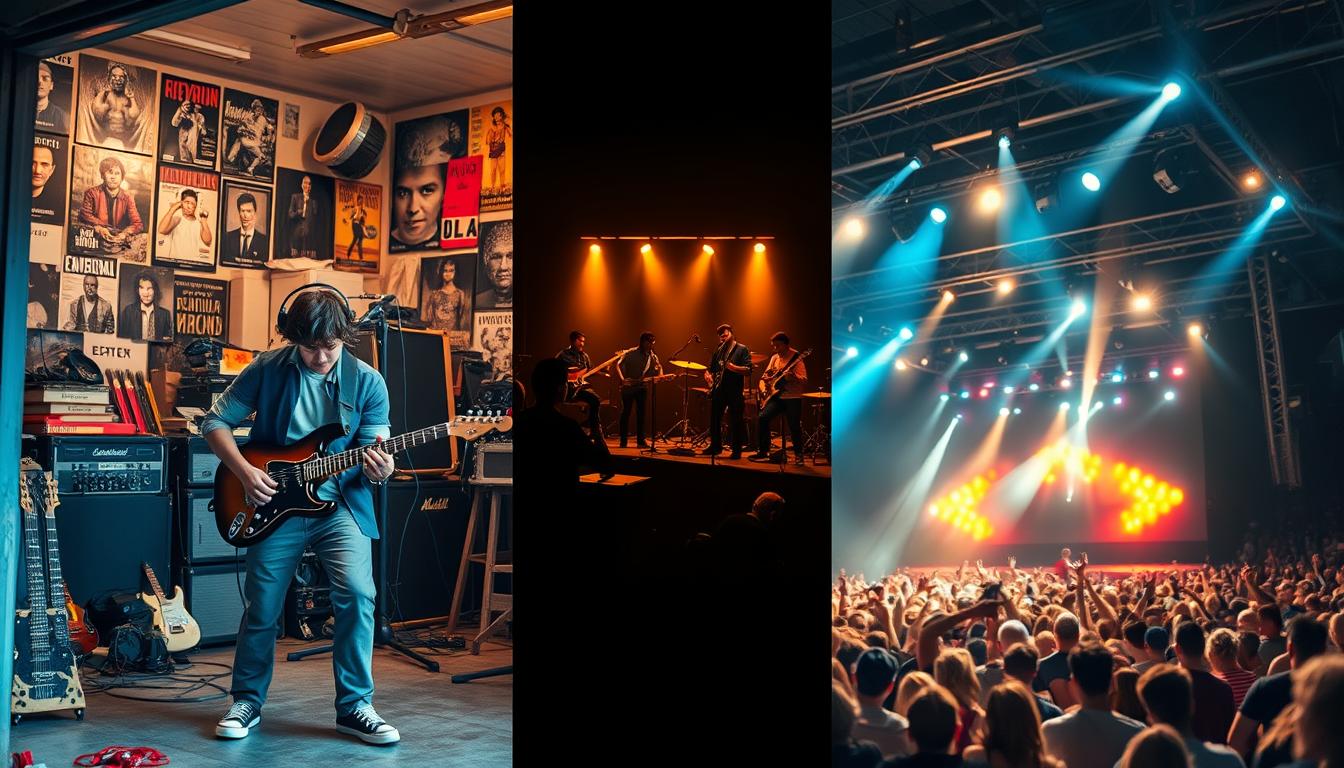
We love celebrating the incredible journeys that shape musical legends. The road to acclaim often starts in the most unassuming places. Think of a garage band practicing late into the night or a solo performer finding their voice in a local bar.
Today’s landscape offers more tools than ever for independent musicians. Digital platforms have revolutionized how talent is discovered and shared. Yet for every viral sensation, there are countless creators honing their craft in small venues.
Consider the paths of Chance the Rapper, Billie Eilish, and Macklemore & Ryan Lewis. Each carved a unique route to the Grammy stage, largely on their own terms. Their successes highlight a powerful shift in the music industry.
These narratives are about more than fame. They are testaments to raw passion, supportive communities, and sheer perseverance. We are thrilled to explore these heartfelt stories with you. Together, let’s celebrate the indie spirit—a movement built on authenticity and grit.
The Development Timeline: Years in the Making
In today’s world, we often focus on quick fame. But the real story of music success is about hard work and patience. We see the big wins, but not the years of effort behind them.
Building a music career is a long journey. It’s filled with daily practice, small gigs, and growing a fanbase. This journey is not done alone.
A supportive community is key. Platforms that help artists grow are essential. They provide a space for new talent to shine.
For example, Spotify’s Fresh Finds playlists have launched over 70,000 emerging independent artists in the last decade. Almost 70% of all Fresh Finds streams in 2024 were from listeners discovering an artist for the first time. This shows a system that works well, slowly introducing new music to fans.
Artists like Chance the Rapper show the value of patience. His Grammy win was the result of years of free music, fan engagement, and community building. His story teaches us about the journey to success.
We celebrate every step in an artist’s journey. From the first song to the first show, success comes one day at a time. Understanding this timeline helps us value every artist’s path. It shows that music career growth is a marathon, filled with lessons and victories along the way.
Early Influences: Childhood Music Experiences That Shaped Artists
We often look for an artist’s breakthrough moments on stage. But the real breakthroughs start in childhood. Early sounds, family support, and personal discovery build a strong music foundation.
Think of the first song that moved you or the family member who gave you an instrument. For artists, these moments are more than memories. They are the building blocks of their creativity. Laufey shared her early doubts, saying, “I remember thinking, ‘I don’t fit into a genre—am I even going to be playlisted?’” Her story shows how personal taste is shaped before industry recognition.
Some artists start alone. Role Model talked about his early days: “I was just making music in my bedroom with no connections.” This image of a creator alone with their ideas is powerful. It shows that the spark often needs no audience. The bedroom becomes the first studio, and experimentation is the first teacher.
These are the personal, internal breakthrough moments. They are the quiet realizations that music is a calling. An artist might not win a Grammy for decades. But recognizing their unique sound at a young age is often the most authentic breakthrough.
We are grateful when artists share their vulnerable origin stories. It lets us connect more deeply with the person behind the music. Understanding Laufey’s genre-blending roots or Role Model’s DIY start enriches their art. It turns listeners into a community that shares in the journey.
Every great career starts with a simple, powerful spark of inspiration. Those childhood experiences—whether filled with doubt, solitude, or unwavering support—are where the magic begins. They are the unsung heroes of every success story we celebrate today.
First Instruments and Writing: The Creative Spark Ignites
We think the best indie success comes from making something with what you have. It’s where every great story starts. It’s not about the tools, but the spark in you.
That first instrument, like a used guitar or borrowed keyboard, opens a door. The first lyrics you write are like blueprints. This moment of creation is key to an artist’s growth.
Many famous careers started with a DIY spirit. Role Model recorded “girl in new york” for free in a friend’s studio. Remi Wolf made her music in a garage while working as a server. Their indie success came from being thankful and determined, not money.

This DIY way of thinking is more than a method; it’s a way of life. It shows that great art doesn’t need an expensive studio. You just need to imagine and be brave. Garages, bedrooms, and borrowed spaces are where real voices are born.
We celebrate the journey from the first chord to the first song. It shows that your creative spark is the most important thing. Taking care of that spark is the first step to a real and lasting career.
High School and College Years: Formal Training vs Self-Teaching
Aspiring musicians often face a choice between formal training and self-learning during their teenage years. This time is a crossroads filled with discovery and the first career milestones. Whether in a university room or a high school bedroom, these years shape who you are as an artist.
Getting a degree in music offers a solid technical base. It teaches music theory, composition, and performance skills. This path builds discipline and connects you with mentors who help you grow.
On the other hand, self-teaching lets you learn by doing. Many famous artists learned through endless practice and online tutorials. Lil Tecca, for example, was just 17 when his song “Molly Girl” hit Spotify’s Fresh Finds playlist. His success came from his own studio work, not school.
Both formal training and self-teaching are equally valid paths to growth. The key is finding what sparks your creativity. We admire artists who balance school with music. Their dedication is a huge achievement!
| Aspect | Formal Training | Self-Teaching |
|---|---|---|
| Primary Setting | Schools, universities, conservatories | Home studios, local venues, online platforms |
| Core Strength | Technical foundation & structured feedback | Creative freedom & real-world experimentation |
| Typical Community | Peers in academic programs, instructors | Friends, online collaborators, local scene members |
| Key Milestone Examples | First recital, degree completion, ensemble placement | First local gig, self-released track, viral moment |
Playing your first gigs and jamming with friends are priceless. These experiences teach you stage presence and how to connect with audiences. They are where theory meets real-world application.
This phase is about finding your unique voice and setting the stage for your future. We celebrate every learning journey. Your path is unique, and we’re here to support it with enthusiasm and gratitude!
First Bands and Collaborations: Learning Through Others
Collaboration is key for new artists. It’s where talent meets reality. In those first bands, musicians learn to create something bigger than themselves.
Many legends started in garages and basements. This phase is a cherished rite of passage. It’s not just about making noise. It’s about building character and a shared vision.
In these makeshift studios, you learn more than music. You learn to listen and find your place in a blend. This balance between compromise and passion is powerful.

These early groups are like creative families. They offer a safe space to experiment and find a unique sound. This confidence is key for the big stage.
Starting with collaborations has huge benefits. It lays the foundation for a lasting career.
- Teamwork & Communication: You learn to share ideas and blend voices.
- Creative Problem-Solving: Working on songs with others boosts your thinking.
- Emotional Resilience: Handling creative differences prepares you for industry challenges.
- Defining Your Sound: Playing with others helps you find what makes you unique.
This process is like building bonds in team sports. In a band, you rely on each other, creating trust that fuels your performance. This dynamic is seen in historic collaborations that changed music, where artists grew by learning from peers.
Each type of collaboration teaches different skills.
| Type of Collaboration | Primary Skills Honed | Common Challenge | Lasting Impact on Development |
|---|---|---|---|
| Garage Band | Band democracy, songwriting from scratch, live energy cohesion. | Aligning diverse musical tastes and commitment levels. | Teaches the essence of “band identity” and raw, intuitive creation. |
| Creative Duo (Songwriter/Producer) | Deep creative trust, refining ideas, studio communication. | Maintaining a balanced partnership and shared vision. | Builds skills for intimate, focused collaboration essential for solo projects. |
| Session & Hired Gun Work | Professional adaptability, reading a room, supporting another’s vision. | Subduing your own ego to serve the song or leader. | Develops versatility and a deep understanding of the music industry. |
These first bands and partnerships make theory practical. They show that music is a conversation. Your artist development journey is faster with others who share your dream. We celebrate this spirit—it’s where great music and artists start.
Solo Career Decisions: When to Go It Alone
The digital age has changed how artists start their solo careers. It’s not about leaving something behind but embracing your vision. We celebrate your courage in taking this step for your music career growth.
Many artists feel a strong urge to express themselves alone. After working with others, they want to share their own sound or message. This isn’t a rejection of past work but a natural step forward.
Modern icons like Billie Eilish and Chance the Rapper show new paths. Billie Eilish started on SoundCloud with her brother. Chance the Rapper released Grammy-winning music for free online. Their stories show how direct fan connections can boost your music career growth from the start.
Going solo means you do everything yourself. You become the artist, manager, and promoter. This brings total creative control and a closer bond with your audience. Every success is yours, and every lesson shapes your journey.
To see different solo paths artists take today, here’s a look:
| Path | Key Characteristics | Artist Example | Core Consideration |
|---|---|---|---|
| Digital-First Independent | Builds audience directly online; retains full ownership and rights. | Chance the Rapper | Requires mastery of digital marketing and community building for sustained music career growth. |
| Strategic Departure from Band | Leaves a group to explore a distinct personal sound; may leverage existing fanbase. | Beyoncé (Destiny’s Child) | Timing is key. Establishing a clear, separate artistic identity is essential. |
| Hybrid/Partnership Model | Remains a solo artist but partners with a label for specific services like distribution or promotion. | Artist like Finneas (collaborator with Billie Eilish) | Offers a balance between creative freedom and industry support. |
| Label-Supported Launch | Signs with a major or indie label early to access resources, studio time, and marketing teams. | Olivia Rodrigo | Involves sharing control and revenue for faster reach and resources. |
There’s no one right answer, only the right path for you. Whether starting online or moving from a group, the goal is the same: true expression. Trust your instinct, plan your strategy, and don’t be afraid to overcome common hurdles to your breakthrough.
We believe in the empowerment of owning every step. Your solo journey is a powerful statement of your art. Embrace the freedom, connect deeply, and write your own story of success.
Industry Connections: Managers, Agents, and Label Relationships
Platforms like Spotify don’t just play music; they connect emerging talent with industry leaders. For independent artists, finding the right team is a series of breakthrough moments. These connections validate years of hard work and open doors to growth.
Role Model’s story is inspiring. His song on Spotify’s Fresh Finds playlist filled his inbox with messages from A&Rs and managers. This recognition turned his solo work into a team effort. It showed his music reached beyond his circle.
Lil Tecca’s manager celebrated his first major playlist add with a screenshot and fire emojis. A good manager is both a cheerleader and a strategist. These industry connections are key for artists to succeed in the business world.
Behind these stories are dedicated platform editors. Spotify editors use data and intuition to curate playlists. They spot talent and create breakthrough moments that attract managers and agents. We’re thankful for these curators who guide artists.
So, what do these relationships do for an artist’s career? Let’s look:
- Managers: They handle daily business, strategy, and are often the artist’s closest advisor.
- Agents: They book shows and tours, turning online buzz into real-world experiences and income.
- Label Relationships: Labels offer funding, marketing, and distribution to grow an artist’s global reach.
Building these partnerships is a big step. It lets artists focus on their music, not everything else. Each connection builds a lasting career.
We celebrate these breakthrough moments in every artist’s journey. Success in music is rarely solo. It’s about finding your community to share your music with the world.
Breakthrough Moments: The Songs or Shows That Changed Everything
A song or show can change an artist’s life. It can go from hopeful to historic. These moments are when hard work meets perfect timing.
Many artists work hard for years before their big moment. One song or show can make a huge difference. Here are three examples of how a single moment changed everything.
Laufey found her big break on Spotify’s Fresh Finds. She felt like it was Christmas. It showed her that her unique sound was valued.
Megan Moroney’s song “Hair Salon” got a lot of attention. It reached people outside of country music. This led to a quick release of her song “Tennessee Orange.”
Wet Leg’s song “Chaise Longue” was on Fresh Finds early on. Fans knew the words at their first gigs. This created a special energy.
Each story shows how a big moment can change everything. Here’s a table that breaks down these moments.
| Artist | Breakthrough Catalyst | Immediate Action | Resulting Momentum |
|---|---|---|---|
| Laufey | Spotify’s Fresh Finds playlist add | Received critical validation and platform algorithm support | Established her as a serious new voice in modern jazz |
| Megan Moroney | “Hair Salon” added to a key playlist | Rush-released “Tennessee Orange” to meet new demand | Broke through country boundaries to a wider audience |
| Wet Leg | “Chaise Longue” on Fresh Finds at debut | Went into first live shows with an already-knowing audience | Generated immediate buzz and a dedicated early fanbase |
These moments are not just luck. They are when hard work meets the right opportunity. A playlist spot can turn into belief. A fan singing along can turn into confidence.
We share these stories with excitement and gratitude. They show that the path to indie success is built on patience. But it’s often sparked by a single, unforgettable moment.
Sustainable Career Building: Beyond the Initial Success & Advice for Aspiring Artists: Patience, Practice, and Persistence
A major breakthrough is just the start, not the end. The real work of building a lasting music career begins after that first hit. Lil Tecca’s story shows this well. His streams skyrocketed over 18,000% after his first big song, “Ransom,” nearing 2 billion streams.
Building lasting career milestones requires key principles. Perseverance helps you overcome obstacles. Authenticity makes your music connect with listeners. A loyal fan base is the base of your success.
Every artist’s journey is unique. Be patient and keep practicing. Show persistence in your work and your relationships. We believe in your voice and support your growth. Your story, from the garage to the Grammy stage, is worth sharing.